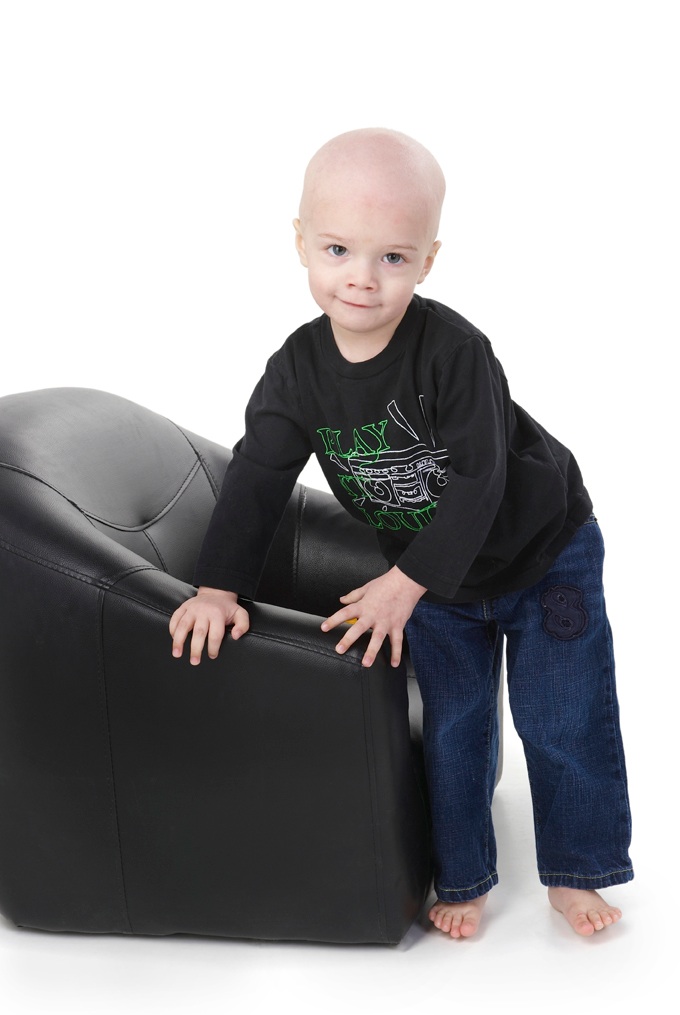
“Until you experience it yourself, you can’t understand what a big difference generosity and support can make in a family’s life.”– Jason Jaskela
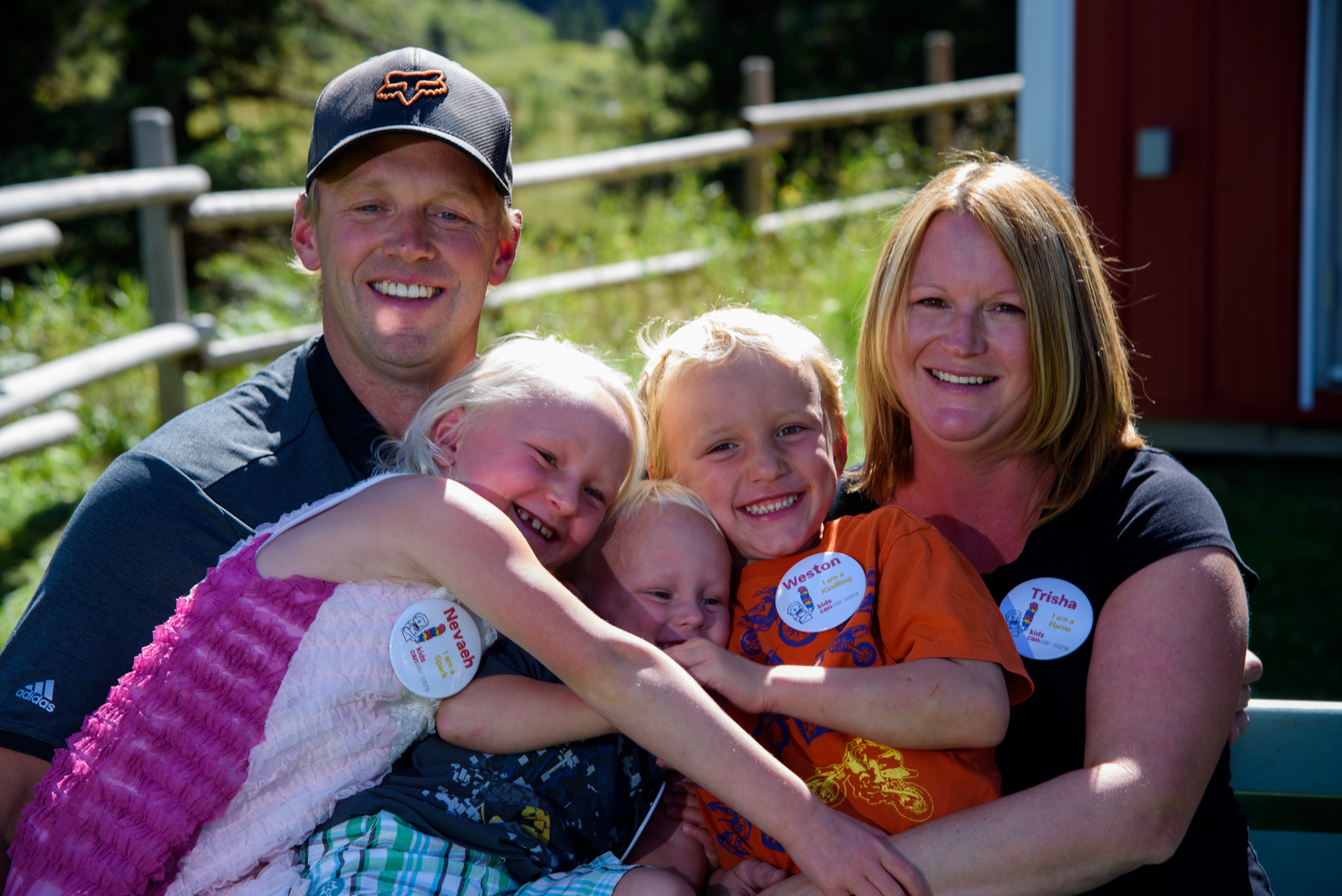
You can feel it the moment you walk in – a bright, elfin energy dancing in the Jaskela household. Three young children, brimming with questions and stories and explanations on life.
“My name is Nevaeh,” the oldest one announces. And she spells it out loud: “N-E-V-A-E-H. Nevaeh is heaven spelled backwards.” Then she explains that she has a brother in heaven and that is why she is named Nevaeh.
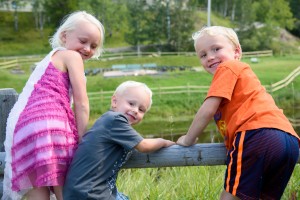
Although Nevaeh (7) and her younger brothers Weston (5) and Joel (3) have never met their big brother, they know him. His memory is still very much alive in their home.
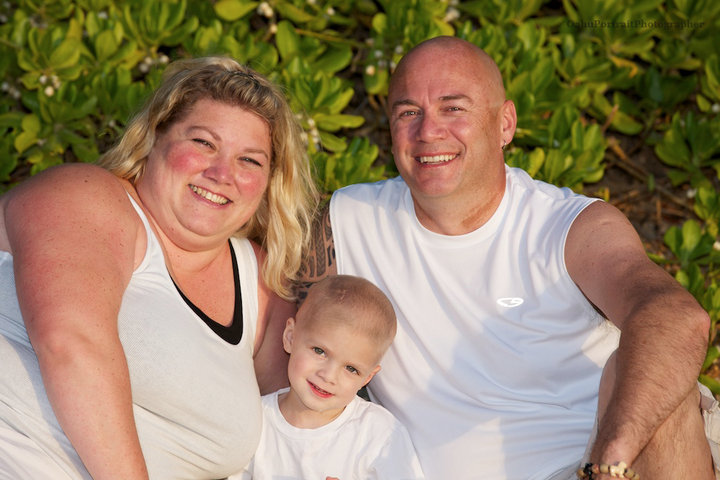
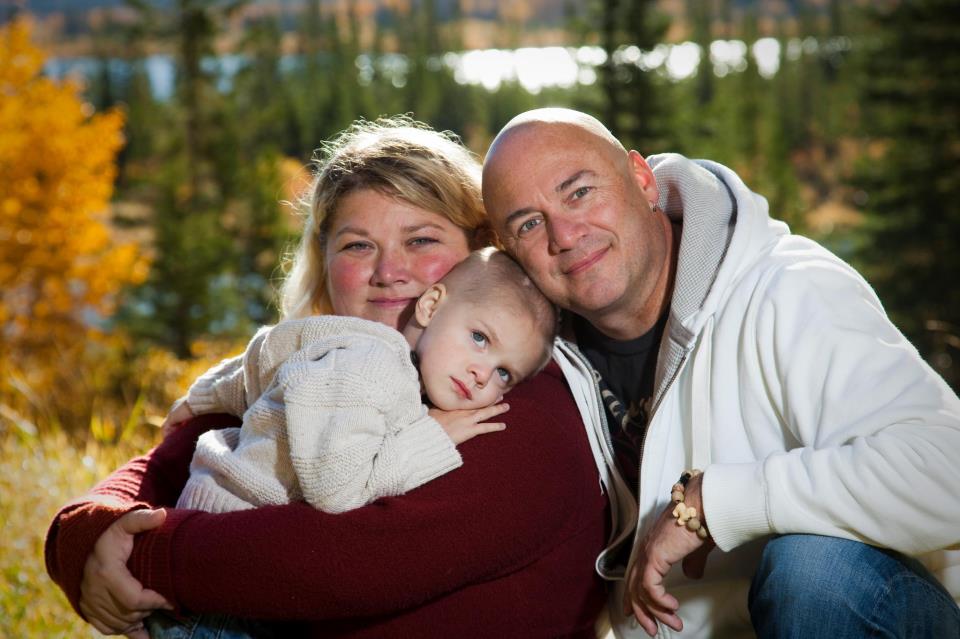
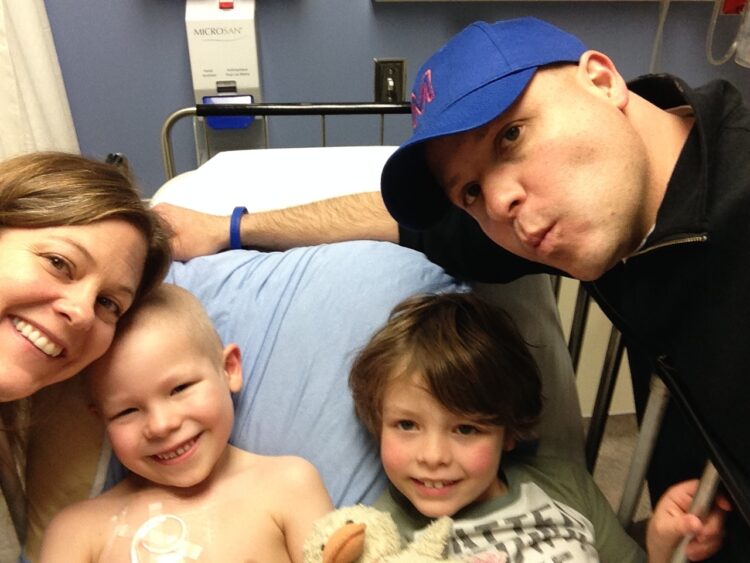
The Jaskela family at Camp Kindle
As with most bereaved parents, Jason and Trisha Jaskela have come to dread the inevitable question:
“How many children do you have?”
The answer they offer is often the simplest one: “Three.”
This is the point Nevaeh jumps in: “You have four kids. Our big brother Cohyn is in heaven. He’s up in heaven now, but he’s all better now.”
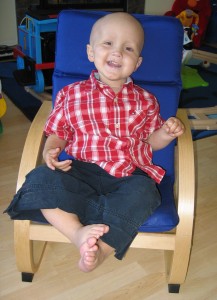
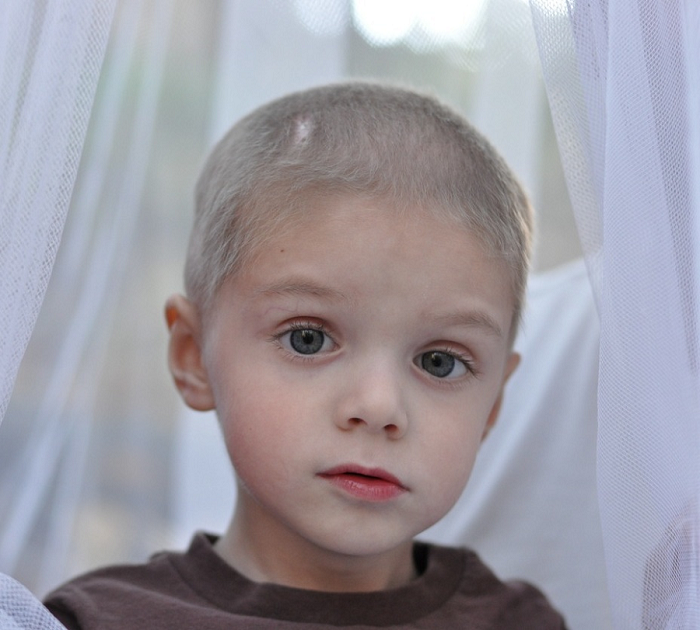
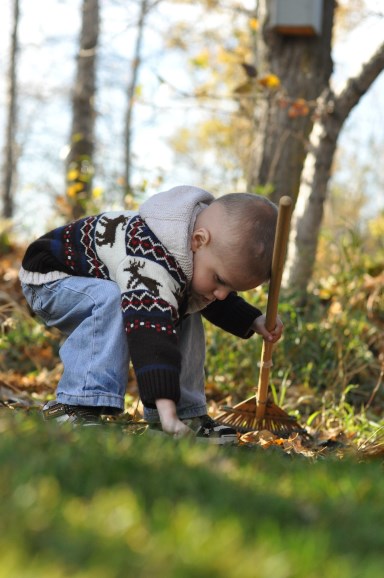
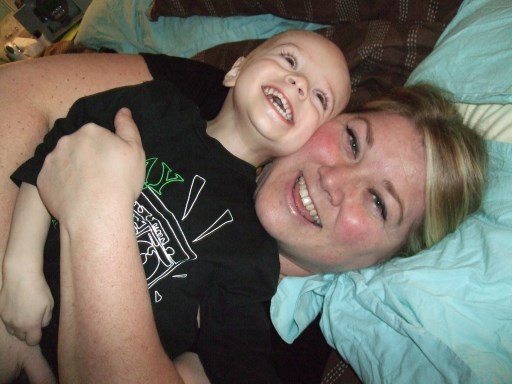
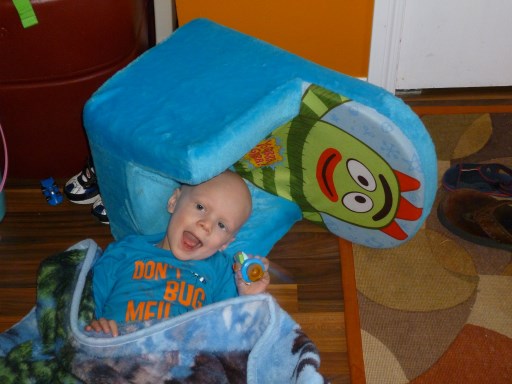
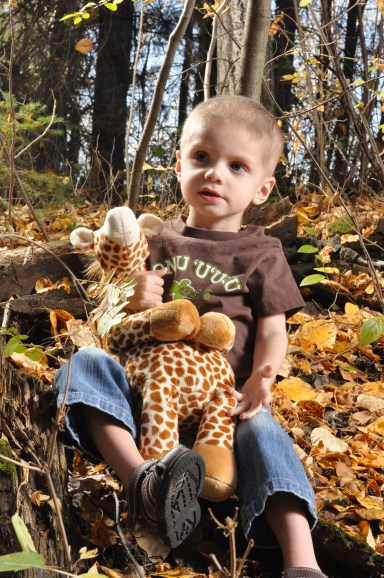
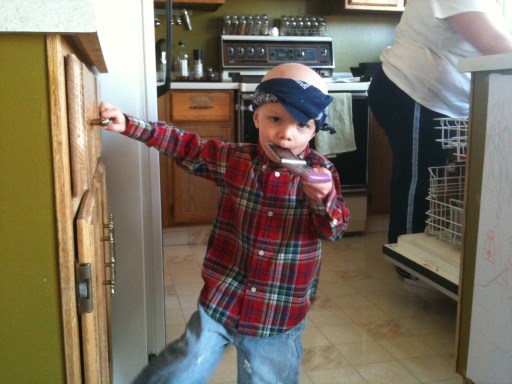
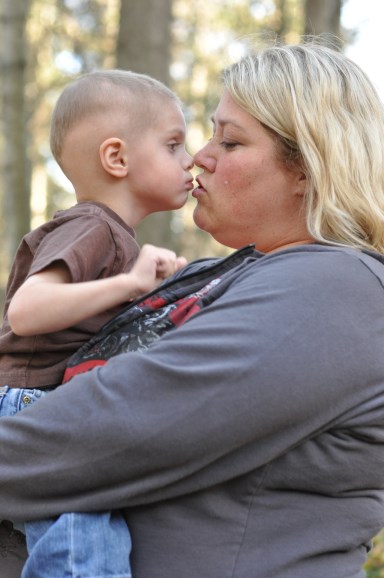
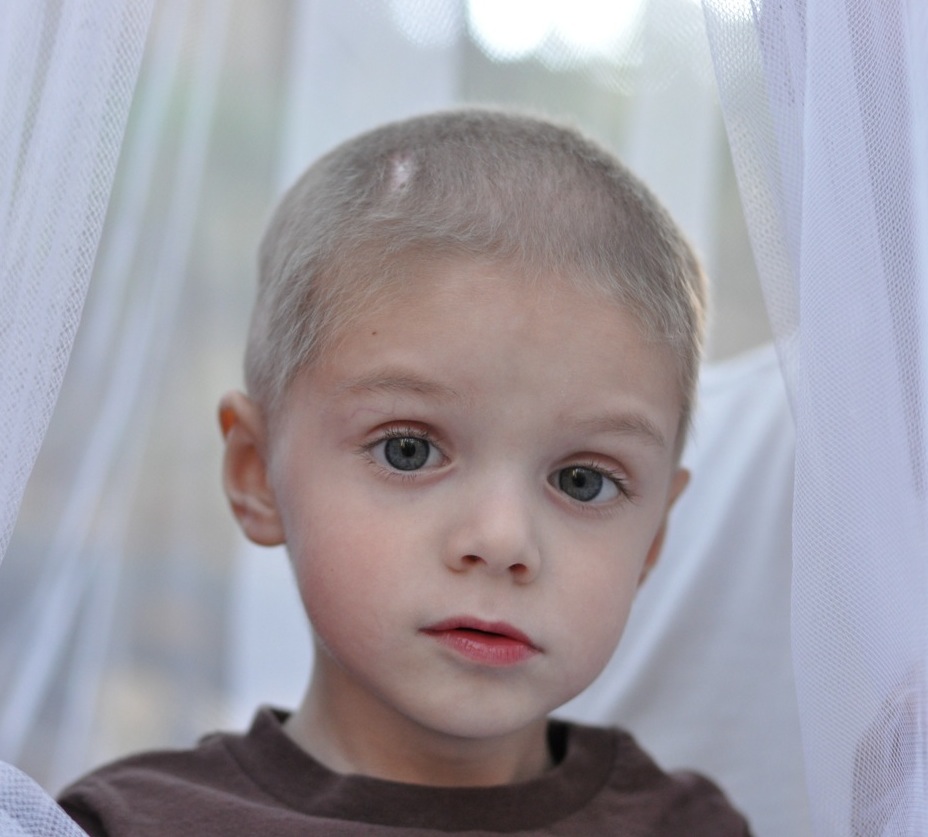
Cohyn was a happy, easy-going little guy who loved life
Cohyn’s journey
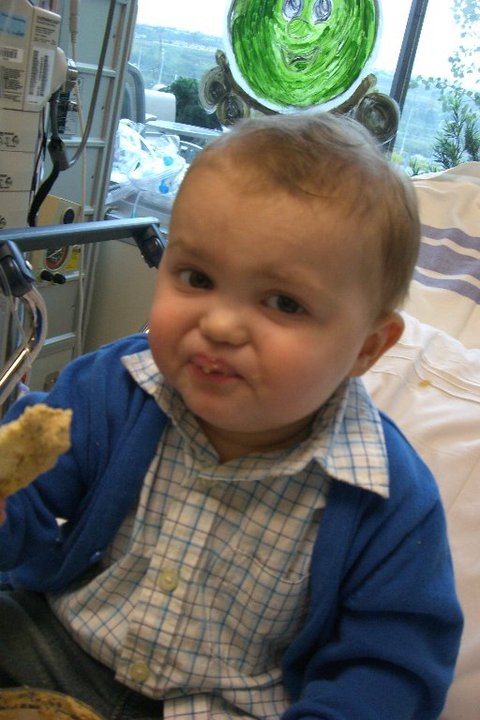
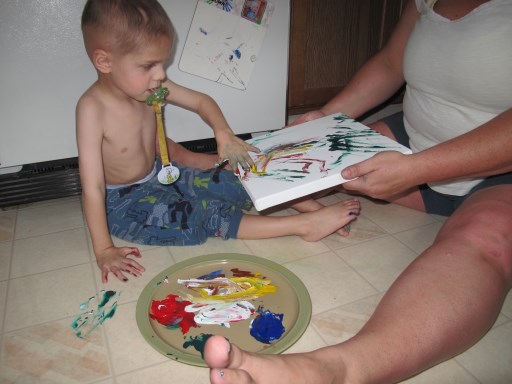
Cohyn was just a year old, when he was diagnosed with a rare and aggressive brain tumour called atypical teratoid rhabdoid tumour (AT/RT). That summer in 2007, Cohyn and his parents embarked on the most difficult journey of their lives.
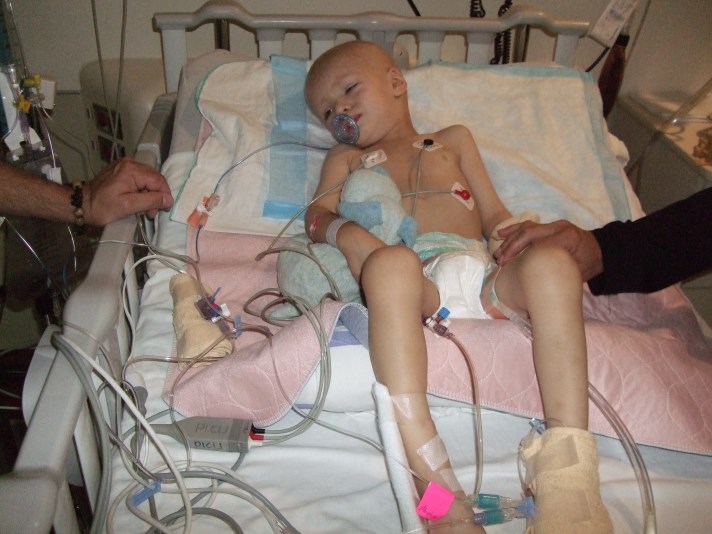
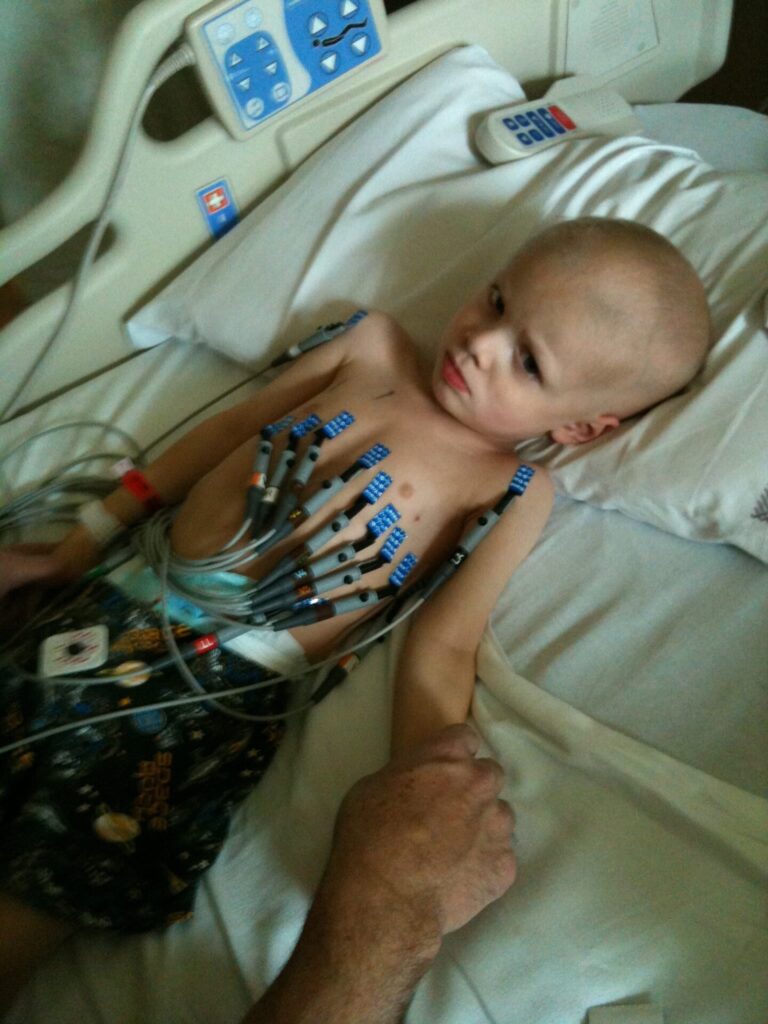
The cancer had spread throughout his entire brain and spinal cord. Cohyn underwent emergency brain surgery, followed by five rounds of chemotherapy and three stem cell transplants. Five months later, Cohyn and his parents were finally able to come home just in time for Christmas.
“He went through all of it like it was a walk in the park,” says Mom Trisha. “For Cohyn, it was all about playing and, of course, flirting with the nurses and high-fiving with the doctors. As long as he could play, everything was great.”
Cohyn was a strong, happy-go-lucky little guy, who loved sports and camping. When he wasn’t at the hospital, his life was all about fast vehicles – motorbikes, boats, golf carts, tricycles.
Cohyn also loved to travel with Mom and Dad. Arizona, Mexico, Fairmont Hot Springs, Vancouver, Niagara Falls, Medicine Hat, Sylvan Lake – he travelled more in two years than some do in a lifetime.
But Cohyn’s biggest love was hockey. He even played it in the hallways of the hospital.
“We never treated him like he was sick,” says Trisha. “A couple of days before his last round of chemo, we took him to a Flames game and sat in the third row. Cohyn wouldn’t even talk to us or look at us for two full periods. His eyes were like saucers.”
Trisha and Jason fondly remember the outpouring of love and support they received during Cohyn’s cancer journey. And, for this, they are grateful.
“Thanks to our amazing support system, Cohyn wasn’t alone for a minute the whole time,” says Trisha. “Friends, family, people from church and work bent over backwards to help. They dropped off meals. Cohyn’s grandparents immediately dropped everything and came to Calgary to help. They even took turns doing overnight shifts at the hospital, so we could get some sleep.”
Kids Cancer Care was one of the organizations that helped Trisha and Jason through this challenging time. Every Wednesday evening, the Jaskelas found comfort in our weekly Pizza Nights at the hospital. During Pizza Nights, they were able to meet other parents facing childhood cancer, exchange stories and share information over warm pizza.
“Until you experience it yourself, you can’t understand what a big difference generosity and support can make in a family’s life,” says Dad Jason.
Cohyn’s legacy
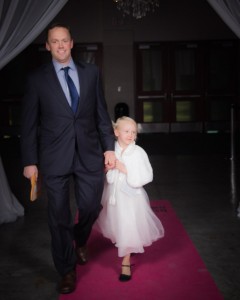
Jason and Nevaeh walk the pink carpet at the Dad and Daughter Gala
Inspired by their son’s memory, the Jaskelas are helping families facing this disease.
Jason and his daughter Nevaeh are regulars at the Dad and Daughter Gala and, in 2016, the family made a significant gift of shares through Raging River Explorations Inc., where Jason works as chief operating officer.
“The current economic situation seemed like the perfect time to make the biggest impact,” says Jason. “Our experience with Cohyn was so challenging and Kids Cancer Care was one of the organizations that was there for us. They are investing wisely in areas that are impacting the lives of children and families today, so it made sense to us to give here.”
Christine McIver of Kids Cancer Care couldn’t agree more: “A gift of this magnitude could not have come at a better time. It is a gift from the heart – from one family to many other families. Their generosity will be felt by many.”
But the gift of shares in 2016 wasn’t the first gift the Jaskelas made to pediatric cancer. Their first gift actually came nine years ago. Moments after Cohyn passed away in 2008, Jason and Trisha donated his tumour and spinal fluid to research.
Slowly, with some scientific arm-twisting, the tumour cells became a cell line and managed to survive in a Petri dish, allowing scientists a glimpse into its inner workings. The cell line ultimately gave researchers an invaluable tool to test for new treatments.
L-R Nevaeh, Joel and Weston overlooking Kindle Pond at Camp Kindle
“The Jaskelas are an exceptional family,” says Dr. Aru Narendran, the Kids Cancer Care-funded researcher, who developed the immortal AT/RT cell line in his University of Calgary laboratory. “They are the true heroes and I hope they know that their kindness continues to work quietly in many laboratories across the world, so maybe one day this cancer will no longer hurt children and families.”
Although Cohyn’s life was brief, his legacy is far-reaching and enduring. It lives in the love and generosity of his family. It survives in the tissue and blood samples his parents donated to science a decade ago. And now, his memory lives on in a quaint little park named Cohyn’s Corner, overlooking Kindle Pond at Camp Kindle. And, perhaps most importantly, Cohyn’s legacy lives in the hope his family continues to offer countless families facing childhood cancer today.
Read more about Cohyn’s cancer journey here, as part of our #familyseries for Childhood Cancer Awareness Month.
I’ve had events in my life that I thought were crashes but they turned out to be speed bumps, very small speed bumps. I can say without a doubt, that December 18, 2009 was when my wife Tara and I’s world actually crashed. This was the day that our son was diagnosed with a brain tumour.
Alexander was born on the 13th of November in 2007. He was perfect and things stayed that way until his second birthday. He had come down with the H1N1 flu. Up to this point Alexander was very active, running and climbing like a little monkey. But now, with the effects of the flu, he started walking like a drunken man. Also, he had tremors in his hands. We knew something was off. Over the next month we saw doctors, physiotherapists, specialists, etc. By the end of the month, things were getting more concerning. Along with the drunken walk and hand tremors, he also had a slight head tilt, back muscles more developed on his left side and he had started choking on his saliva. Soon we found ourselves at the Alberta Children’s Hospital. After many hours, neurology was convinced that we were still seeing the effects of the flu and sent us home after putting us on a three- to four-month wait list for a MRI.
On the 18th of December, we were back. Alexander was throwing up and complaining of a nonstop headache. They sent him for a CT scan. This brings us back to the point our world crashed.
Suddenly, we moved from a four-month wait for a MRI to one hour. A lemon-sized tumour was removed three days later. When they brought him back to the Pediatric Intensive Care Unit after surgery, he had a six-inch incision in the back of his head. I found myself thinking, “He’s so small; how can this be happening to a little boy?”
After the surgery, Alexander had to have a lot of physiotherapy to learn how walk again and use his hands again. One of the side effects was mutism, so he also had to learn to talk again.
At this point, we were told he had medulloblastoma. If you’re going have a tumour, this is the one you want. A 95 per cent survival rate sounded really good to us on paper – but we still had an uneasy feeling that it was not going to turn out okay. Trust me; we never wanted to be more wrong in our whole life.
Alexander was so brave through all of it. Over the 10 months that he was sick, Alexander had two brain surgery’s, a dual Broviac installed, a central line in his chest, a central line in his leg, two external ventricular drains in his head, a third ventricle installed, stem cells removed, countless blood draws, CT scans, MRIs and countless other procedures. Through all this, he rarely complained. Even in the end, when the pathologist explained what the tumour had done to his brain (which was pretty horrid), all Alexander had ever done was point to the back of his head and say, “Owie,” and continue playing. Looking back, I realise how easy it was to be strong… because he was strong.
Alexander’s protocol consisted of six rounds of chemo with the last three rounds being stem cell rescue. After the third round he got a MRI. The results showed that he had a spot on his brain, which we were told may or may not be a tumour. He also had five tumours in the nerve bundle of his spine, which were inoperable.
Over the next five weeks, we completed the first round of stem cell rescue and added five rounds of intrathecal chemo, which is chemo injected into his spine. At this point, they did another MRI to see if the chemo was working. Not so much. The spot on his brain was definitely a tumour and he now had eight tumours on his spine. We stopped the chemo completely.
The uneasy feeling was getting really strong now. The chemo didn’t even slow the tumours down.
Radiation was something that scared the hell out of us. Depending on the dose of radiation, children under three can be severely brain damaged. Unfortunately, Alexander’s tumours were showing themselves to be extremely resistant to treatment. This meant our only option was to give him a serious dose of radiation. He received 31 doses in total and almost the same for his spine.
Thirty-one doses of radiation and he never complained. Large blisters on his head and still no complaints. Burns so bad his head peeled and, you guessed it, no complaints. To this day, we marvel at his strength.
We waited five weeks for the next MRI. The radiation had done absolutely nothing. He still had the spinal tumours and the brain tumours had grown fast while on radiation, which is very rare. We were told they could do one more brain surgery, but there was no way to get it all.
When they went in for this surgery, they realized the tumour was not what it had appeared to be. His tumour was actually ETANTR, embryonal tumour with abundant neuropil and true rosettes. This is a tumour that can mask itself and then change its cell structure to reveal its true self. No one has ever lived with this tumour past 10 months from diagnosis. Alexander was only the 36th case recorded.
They gave us a couple of options to possibly extend his life a little bit, but it would mean more hospital visits and that’s not how we wanted to live our last days, so we decided against those options.
Despite a bout of meningitis, we went on our last family trip that September to Hawaii. He had a private swim with two dolphins for 30 minutes and we also bought and released 31 butterflies; one for each round of radiation. The rest of the time was spent swimming and sitting in the hot tub. Every time we asked him what he wanted to do, the answer was “Hot Tub.”
It was sad to leave Hawaii because it meant we were going home to spend his last days. We had made a bucket list before we left for Hawaii and we were going to try our best to complete all of it.
The first thing we did when we got home was go to Akisha’s birthday party. Akisha was his girlfreind and her party was at a jungle gym. What could be better?
After the party, we hooked up the travel trailer and went to Kids Cancer Care’s Camp Kindle for a weekend. We brought along one of his best friends and camp aide, Samantha. While we were still at camp, I put Alexander on my lap and let him drive the truck pulling the trailer. Driving the truck, another thing off the bucket list.
Next, we went home and packed for Banff National Park. While in Banff, he got to go on a helicopter ride over the mountains, swim in the hot springs and take a gondola ride up the mountain.
From Banff, we drove straight to Stony Plain Alberta to visit his grandparents. A couple days later, we went to West Edmonton Mall and the indoor water park. While we were there, he got to go behind the scenes at the aquarium and feed the sea turtles, etc. We also took him to a pet store to play with puppies a couple days in a row. By now, he was getting very tired and sleeping most of the time, so we knew we were close. He went to bed that night and got up the next day unable to walk. I guess it’s time to go home.
We checked into the Rotary Flames House on the 11th of October. We spent the next 13 days playing, watching movies, reading books and anything else Alexander wanted to do. By this point, his right eye had failed him and his hand tremors were really bad. His spirit did not falter at all.
One evening, Alexander had just finished eating supper and looked at me, raised his hands to me and said, “Upstairs.” We went upstairs to bed and I cuddled with him for about ten minutes. Tara came in to say good night, we all cuddled up, and he went to sleep about five minutes later. At the time, we didn’t know it was the last time we would put our son to bed.
About two hours after falling asleep, he had a seizure and went into a coma that he never came out of. Over the next few hours he went down to about two breaths a minute and we thought we would lose him that night. We held him sitting up between us in a big family hug for about an hour, but he stayed with us. At that point we laid him down and his breathing evened out and became more regular. By seven the next morning his condition hadn’t changed, so we decided to treat it like any other day. I started by reading him all the children’s books we had with us and then we all watched Toopy and Binoo for a couple of hours. The hospice we were at has a large common area with a large fish tank, projector TV and a large bean bag mattress that he loved to lay on. We believe that even though he was in a coma, he still knew what was going on around him so we took him to the bean bag bed and spent the day there. During the day, we played music, read him books, gave him a nice bath and rinsed out his mouth every 30 minutes to keep him comfortable.
We spent 29 hours making him comfortable, but now looking back we realize he spent 29 hours making us comfortable enough to let him go. We knew for many months that his time was close and we thought we were prepared for it, but he knew better. He knew we needed time to read to him and stroke his hair, time for hugs and quiet “I love yous” and time for us to tell each other we would be okay.
We took him back to bed about 8:00 that night. We had just spent one of the hardest, but most beautiful, days ever. We would be lying if we said we hadn’t cried our hearts out that day or laid on the bed writhing in anguish, trying to imagine life without our “Mister Man.”
His breathing had become more shallow and ragged over the last few hours until it finally stopped. We lay with him and told him he had been brave long enough and he could go now. We had been warned about the “big gasp” that was going to come, but it still scared the hell out of us. It happened over and over. He’d stop breathing for a minute, and then gasp. We realize that he was not in pain when it seemed he was fighting for breath, but that it was just a change in breathing patterns towards the end. This does not make us feel any better though, the most horrid thing a parent can go through is to watch your child gasp for breath as he dies.
Every time this happened, we talked to him and tried to tell him it was okay to let go; he would come back. At some point we realized he was waiting for something. Finally we realized he didn’t want us to see him go, so we kissed him good night and went to sleep.
He had waited for us to go to sleep before quietly passing. At 1:09 a.m. on the 23rd of October, 2010, he was gone. That was the moment our lives ended. Life will continue on a different path, but life as we had known it, was over.
After a good bit of crying, we washed his face, changed his diaper and dressed him in his favourite pyjamas. We donated his tumour for research, which meant it had to be removed within two hours of him passing. We carried him in our arms to the hospital for the tumour removal.
We decided to have a celebration of life in keeping with the happy life he led. There were balloons, temporary tattoos, bubbles, glow bracelets and a clown. We released over 200 balloons while a dear friend played the bagpipes. It was a beautiful day to celebrate a beautiful life and 130 people came to celebrate with us.
We spread his ashes on his third birthday in the ocean. A baby turtle came to the surface before we scattered his ashes. At the end his hair had grown back and his tumour had been removed, so when his ashes were scattered he was a normal boy, tumour free.”
-Jonathan Brown, Alexander’s father
Our researchers are in the lab right now working to find better treatments for children with cancer. You can help our scientists carry out their essential work by making a tax-deductible donation here today.
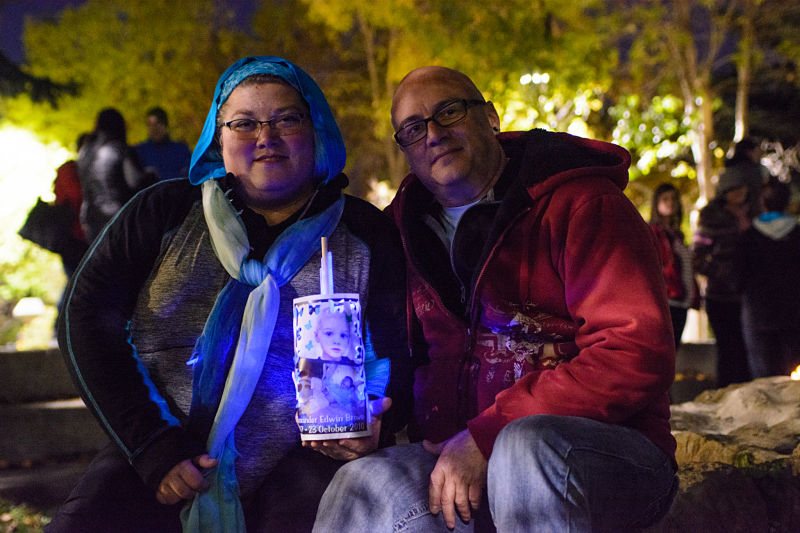
Tara and Jonathan attend Kids Cancer Care’s Time to Remember for bereaved families
Transforming lives: building a volunteer legacy
“I want them to know they are changing lives at Camp Kindle. Kids can develop and grow with all that encouragement, support and commitment. There are small wins and big wins that will change the course of a child’s life forever. I believe this for Levi!”— Levi’s mom Cheryl
Jack Perraton was known as the ultimate volunteer, and among his many volunteer roles was his nine-year term as chair of the Kids Cancer Care Board of Directors. During Jack’s term, the foundation experienced tremendous growth, and the crowning achievement of those years was the purchase and planned renovation of Camp Kindle.
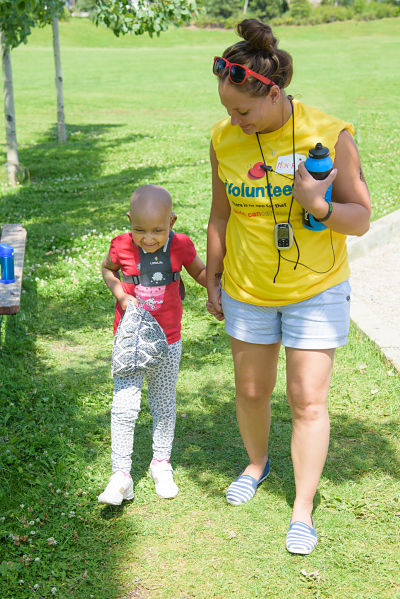
Sofia walks with a one-to-one volunteer aide at camp
When Jack passed away in February 2012, after his second battle with cancer, his good friend JR Shaw of Shaw Communications decided to do something special in his memory — something that would honour Jack and the life he lived. Jack had passed away before the renovation of Camp Kindle could be completed, and JR felt that completing it in his name would be a lasting tribute to Jack’s spirit and generosity.
“Jack was the ultimate giver, the ultimate volunteer,” JR said during a 2013 reception to honour his friend and celebrate the opening of the Jack Perraton Volunteer Lodge at Camp Kindle. “He set an example for all of us and his footprints, I’m sure, are everywhere here. He would be so proud to have his name on this volunteer lodge.”
Along with Jack’s footprints will be those of countless volunteers to come — volunteers who will also leave a lasting impression in the lives of children with cancer. With a charitable contribution to our 2017 volunteer program, Shaw Communications is helping keep the volunteer legacy alive by providing the necessary resources to attract and maintain the best volunteers at Kids Cancer Care.
Kids Cancer Care volunteer Shellan shows off our new Shaw volunteer gear.
“Volunteers are the heart and soul of Kids Cancer Care,” says Christine McIver, who started the foundation over 20 years ago as a volunteer. “We are so grateful for this gift from Shaw Communications. It is the perfect way to keep Jack’s volunteer spirit and legacy alive, while helping us to recruit, train and retain volunteers for tomorrow.”
Eleven-year-old Levi is one of many kids to experience the lasting influence of volunteers in his life. Diagnosed with high-risk leukemia at 18 months, Levi endured repeated rounds of chemotherapy that lasted until he was five years old. Although Levi is cancer-free today, survival came at a cost. He suffers from high levels of anxiety and neurocognitive issues that are affecting his ability to learn and function at optimal levels. Levi’s psychologist believes he suffers from post-traumatic stress disorder due to the invasive medical procedures he received as an infant.
For years, staying overnight at Camp Kindle was out of the question for Levi. The thought of being away from home for a whole week was just too stressful. Each time he tried, his anxiety got the best of him and he came home from camp mid-week. With energetic coaxing from his parents, Levi decided to give Camp Kindle another try.
After a couple of rough patches on Monday and Tuesday, and repeated telephone conversations with his mother, Levi reluctantly agreed to stay on until Wednesday. Meanwhile, his mother Cheryl and Levi’s counsellors met by telephone each night to explore ways to help him manage his anxiety. When Cheryl spoke with Levi on Wednesday evening, she couldn’t believe the transformation in her son.
Levi hangs out with a camp program volunteer
“I could hear joy and confidence in his voice. He was proud of himself!” she says.
Levi’s victory at Camp Kindle is now spilling over into other parts of his life. “Getting that psychological demon off his back was huge,” Cheryl says. “It’s a total game-changer. He gained so much that week at Camp Kindle that he’s riding off now to face other fears.”
Finding the perfect complement of volunteers at Camp Kindle is essential to a child’s camp experience, and the nature of the role requires rigorous screening and intense training.
“The time and resources dedicated to recruiting and training these volunteers is significant, so retention is also a huge focus for us,” says Tracey Stahn, who oversees the volunteer program at Kids Cancer Care. “Shaw’s support will go a long way to helping us achieve these complementary goals.”
Thanks to companies like Shaw Communications, kids with cancer will continue to feel the lasting impact of volunteers at camp and at every stage in the cancer journey. Volunteers are active on all fronts of the foundation, from volunteer cooks who prepare home-cooked meals for newly diagnosed families, to one-to-one camper aides who provide extra support at camp, and specialized tutors who support children struggling at school. Shaw’s gift to the volunteer program will leave a legacy of giving in the hearts of children with cancer.
A proudly Canadian company, Shaw is committed to improving the lives of Canadian kids and youth through the Shaw Kids Investment Program (SKIP). To learn more about SKIP, visit Shaw.ca/SKIP.
Volunteers in action at Kids Cancer Care On the frontlines at camp or behind the scenes at our fundraising events, 300+ volunteers are active at all levels of the foundation. They are the heart and soul of our work, giving over 16,000 hours each year.
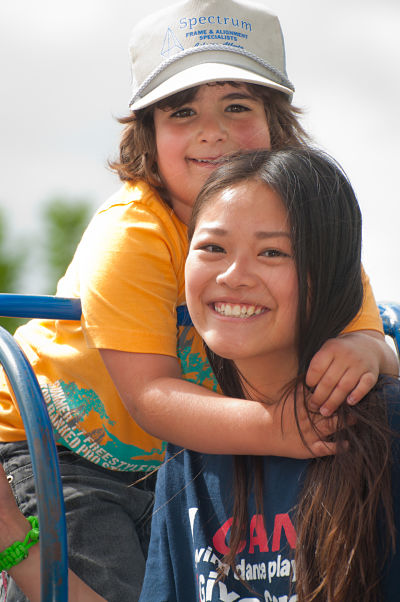
Volunteer and camper at SunRise
Volunteer and camper at SunRise
Volunteers and camper at SunRise
Volunteers and campers at SunRise
Camp Kindle volunteer and campers
Volunteers gathered at Camp Kindle
Volunteers at the Dad and Daughter Gala help the event run smoothly
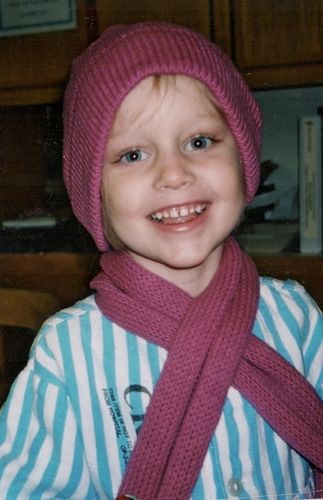
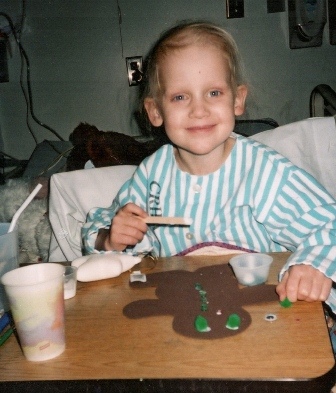
Years ago, when I was a small child, I received a new cancer treatment that saved my life. Right now here in Alberta there are children who need new treatments because current therapies are not working. To show you how important these treatments are I’d like to share my story.
Kate’s cancer journey began when she was four
It starts way back in September of 2001 when I was four and my Mom and Dad noticed that I was unusually crabby and irritable. I wasn’t myself at all. Normally I was a happy and energetic kid. But, at that time, I was so tired I used to curl up on the couch and have a nap after breakfast. Sometimes, climbing the stairs was just too much. I would wait at the bottom of the stairs for my mom or dad to carry me up to my room. My parents thought my change in behavior was due to the recent changes in our life. I had just begun pre-school and my mom had just started working again.
Eventually, my skin became so pale and my eyes, so puffy, that my parents took me to the doctor. In the beginning, the doctors thought my symptoms were from allergies. Then I started having these high fevers, so we took a trip to the emergency, where they finally did blood work.
Although my family wanted answers, no one was prepared for the shocking news and the terrifying statistics that came with the results of my blood work.
At first it looked good. Doctors originally thought I had acute lymphoblastic leukemia (A-L-L), a leukemia with high survival rates in children. But when I went in for a test the next day to confirm the diagnosis, the doctors hit us with even worse news. With sinking hearts, my Mom and Dad learned that I didn’t have A-L-L. I had a cancer that was very aggressive and not often found in children. Acute myeloid leukemia. My long-term survival rate was suddenly cut in half.
Knowing that 25% of children with A-M-L don’t survive the first phase of chemo, the doctors offered my parents a new treatment protocol. I was one of the first patients at the Alberta Children’s Hospital to ever receive this treatment.
And so I began my first of four rounds of chemotherapy. Strangely, instead of making me sick, at first, the chemo made me feel better. My body wasn’t producing red blood cells or platelets and I had just received my first of many, life-saving blood transfusions. I was coming back to life again.
I finished the first half of that round of chemo and had a three-day break. I looked better than I had in months and we were excited to get our family pictures done.
But by the ninth day of treatment, I had zero white blood cells and the fevers began. They were relentless, hovering between 38 and 41. The drugs that once made me feel better were now making me sick. When I finished that first round of chemotherapy, they put me on the strongest antibiotics possible. Without any white blood cells, my body had nothing to fight infection on its own. Even the strongest antibiotics didn’t work.
Those hours you spend with or without white blood cells can make all the difference. It can determine whether or not you live. But the antibiotics can only do so much without help from your body. It was critical to get my white blood cells back up…so I began daily injections. After 48 hours in ICU, new blood work brought some good news. My white blood cells were coming back and, after a bone marrow biopsy, they discovered I was in remission!
That was round one.
Due to the complications I experienced during the first round of chemo, the doctors changed my second round. Despite the changes, the second round hit me hard. My weight dropped dangerously low. I wasn’t eating and I had excruciating pain in my chest. When the pain in my chest grew, they did some tests and found I had fluid around my heart and scar tissue in my lungs. I was four years old and I had suffered a heart attack! They did a laparoscopic lung biopsy to remove the fluid around my heart. But it wouldn’t budge. Finally they used a much larger needle and extracted the fluid.
After the chest tube was removed, I finally took a turn for the better. I wanted to eat for the first time in months. When I found out that Santa was coming to the hospital, I got super excited. And, for the first time since I’d gone into the hospital, my mom believed I would be home for Christmas.
She was right. I got a two-hour pass to go home on Christmas Eve. Although I spent most of the evening in my father’s arms, it was amazing to finally be out of the hospital.
I began my third round of chemo in the New Year and then my fourth. During my fourth round of chemo, I had a fever for 28 days! I ended up with another fungal infection in my lungs. By the end of the last round of chemo and, after 7 months in the hospital, my parents couldn’t believe they were finally taking me home.
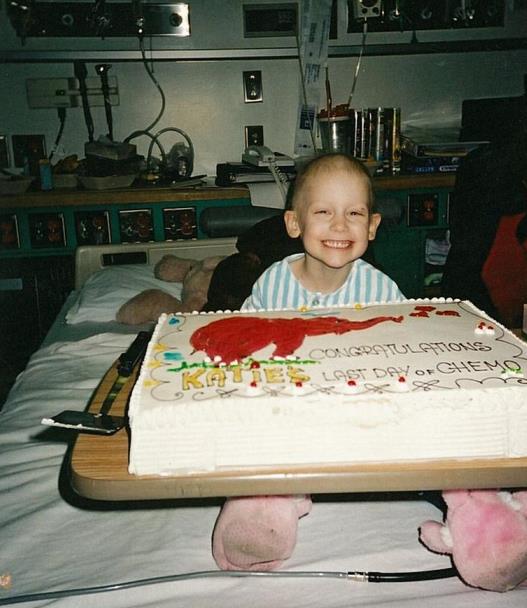
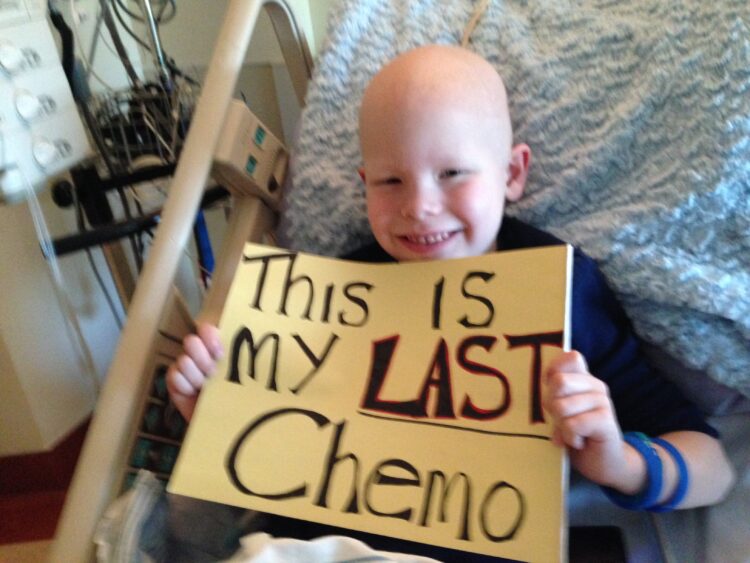
Last day of chemo and ready to go home
Mom tells me that the shock of hearing the words, “Your child has cancer,” cannot be explained. The fear and uncertainty ran so deep, she felt like her world had stopped.
How does a child survive cancer? How do you take care of such a sick child and still care for your children at home? How do manage to go to work each day, when you’ve been sleeping on a cot next to your daughter’s hospital bed?
My bothers and I became my mom and dad’s total focus. Their daily routines were filled up with us, constantly spelling each other off for work or hospital shifts. My mom had only been back to work for three months when I was diagnosed. Needless to say she quit her job and I became her new daytime focus. My brothers were in school, so my mom would get them off to school in the morning and then come to the hospital to relieve my dad who spent every night with me — either on a cot or in a Lazy Boy. My dad would head to work for a few hours and then pick up my brothers from school and have dinner with them. Then around seven o’clock, my dad would come back to the hospital, relieve my mom, who spent every day with me.
They did this for seven months! They had very little time together and carried around an enormous amount of stress and anxiety.
My brothers Owen and Evan were only six and seven and they were feeling really lost during this time. With only one parent around at any given time and a sister in the hospital, they were forced to grow up too quickly. They had to answer questions that no child should have to answer. Questions about cancer, chemo, hair loss, even worse, death.
That’s where Kids Cancer Care came in. They scooped us off that summer and gave us the magic of camp! They connected us with kids who knew exactly what we were feeling. They gave us a place where no one stares and where no one has to answer questions or feel like they need to hide.
After that week at camp, we started feeling like kids again and, my parents had time to regroup. It was then that they realized we were going to be alright. We were all okay. Finally.
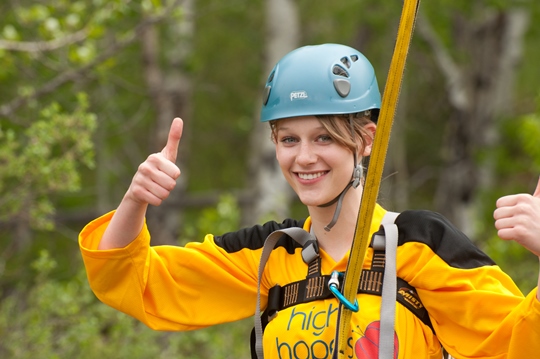
Kate at the 2012 High Hopes Challenge
But really it wasn’t until Christmas 2002, more than a year after my cancer diagnoses, that the cancer-focus of our family finally started settling into the background — not our of our minds completely, but moving to the sidelines.
My mom says sometimes she doesn’t know how we all survived it. But somehow we did. She says you find the strength and courage you need and you learn that you have inner reserves you never knew you had.
Seeing me go through this was terrifying for my parents. The intense schedule they had to keep was physically demanding and emotionally exhausting. Cancer is tough on kids but sometimes I think it’s harder on the parents.
I wouldn’t be here today if not for that new treatment protocol. It was tough on my body, but it saved me. That treatment would not have been possible without research. It seems almost miraculous when I think about it.
I hope you realize now why I am so grateful for people who support Kids Cancer Care’s research program. Thank you. Please remember that the research you are supporting today could save a child’s life.
~ Kate
Kate’s photo gallery
Kate at Parents’ Quest
A cross-country runner, Irish dancer and self-described science nerd, Colette was just a normal 13-year old kid. But there was nothing normal about the pain she was experiencing in her stomach. Due to the pain and an accompanying virus, Colette visited her doctor. The doctor ordered scans which revealed a mass in her stomach.
Colette cross country running
Colette and her family were hopeful that the mango-sized tumour removed from her abdomen would test benign.
On July 24, 2014, Colette and her parents received the results.
Before the mass in her stomach was discovered, Colette loved to dance. She had been an Irish dancer since grade one. It was a major part of who she was. During surgery, the tumour was found to be wrapped around a femoral nerve, which meant they had to cut some of the nerve to remove the tumour. A 12-cm gap was left in her nervous system’s electrical circuit. Now, messages from her brain that tell her leg to move no longer get there.
Colette could no longer use her knee properly for walking, dancing, running or jumping. Once a cross-country runner, she was now using a walker just to move around a room.
But that wasn’t all that Colette was facing in those first days after surgery. Unfortunately, the tumour was not benign. Colette was diagnosed with synovial sarcoma.
“I didn’t know what to think, which I guess, begs the question: What do you think when you are first diagnosed with cancer? Maybe treatment options? At least something. Well, I thought of nothing. For the first time in my life, I drew a complete blank. I didn’t know what to think.”—Colette.
On the second day of her grade-9 school year, Colette had her first chemo treatment. She describes it as having the worst stomach flu, over and over again. She couldn’t attend school due to feeling ill or her compromised immune system. She began to feel isolated from her friends. Would she ever feel like a “normal teenager” again?
While on treatment, Colette was registered for a weekend camp at Kids Cancer Care’s Camp Kindle. Colette and her parents were nervous. Leaving home in Calgary, where she was visiting the hospital every other day, to head out to Camp Kindle in rural Alberta, was unnerving. But Camp Kindle is unique – the facilities are tailor made for kids on and off treatment. The ReKindle Clinic on site takes care of everything. Nurses ensure medications are double-checked. And Colette no longer felt isolated. “At camp, there is an unspoken understanding that brings everyone together. I could just be me, not the girl with cancer, because there, I wasn’t different.”
Colette at Camp Kindle
After multiple surgeries, chemotherapy and 28 days of radiation, Colette finished treatment in January 2015. Life will always be a little different for Colette. She has undergone nerve transfer surgery in the hopes of gaining some function in her quad, but for now, it is a waiting game and she is grateful for even the slightest improvements.
“I like to think that my doctors and surgeons saved my life and Kids Cancer Care helped put me back together,” says Colette. “Kids Cancer Care has been with me every step of the way”
Colette has experienced all Kids Cancer Care has to offer for kids affected by childhood cancer – she’s been a part of the Teen Leadership Program, PEER Program, and more.
Colette on the Teen Leadership service trip
Kids on treatment aren’t the only ones who feel isolated. Colette’s parents have also been on the Kids Cancer Care Dragon Boat Parent Team and to parent activities like yoga and cooking class, where they can meet parents who have been through the same worries, anguish and pressure.
“I’m setting my sights on new sports and experiences. Today, I feel like I am back to being a typical teenager,”—Colette.
But there’s more to Colette’s story.
Last summer, Colette was able to expand some research for a science fair she had done during her cancer battle and joined Kids Cancer Care researcher Dr. Aru Narendran in his lab as a Kids Cancer Care summer research student. Colette was able to see firsthand, research that may one day change the course of childhood cancer forever. Colette studied a unique new drug against three types of neuroblastoma and found that it inhibited growth in all three by stopping the action of a protein called EZH2, which is involved in blocking tumour suppressor genes. Colette’s findings seem to suggest that the drug may not only be inhibiting cancer growth; they may actually be inducing cellular death in the neuroblastoma cells. Another promising attribute of the drug is it doesn’t seem to attack regular cells, which could mean fewer side-effects for patients.
Colette’s life was greatly impacted by childhood cancer, but Colette has set her sights on being part of the quest for a cure. She plans to pursue a Bachelor of Health Sciences at the University of Calgary and follow that with post-graduate work in pediatric cancer research.
Colette believes that “one day with further research, cancer treatment will be less harsh or hopefully, someday, there may be no cancer at all!”
Science Fair
“Tundra is the ideal community partner.” – Jill Miller
When you think of tundra, you typically think: “Vast rocky terrain in the frozen hinterlands—cold winds and permafrost.” But there’s another kind of Tundra in North America that’s a whole lot warmer, a lot more fun and definitely a lot more charitable.
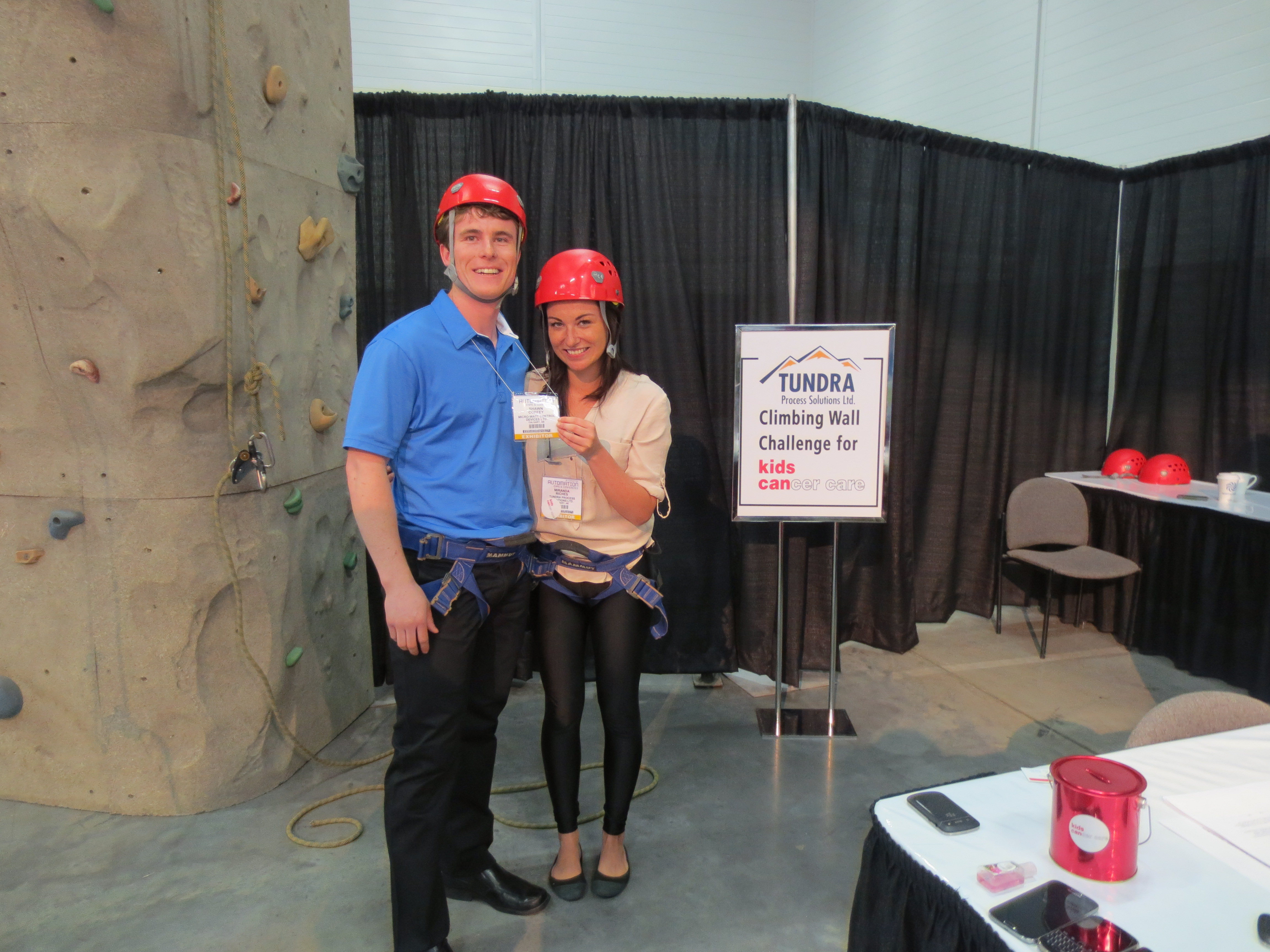
Tundra Process Solutions Ltd. joined Kids Cancer Care in 2010 as a community fundraising partner and has given with gusto ever since. Specializing in industrial equipment solutions for companies across western Canada, Tundra manages to build fun and friendship into everything they do. Their work-hard, play-hard attitude has seen the company grow 50 per cent every year for the past decade. They are the seventh fastest growing company in Canada today.
Fortunately for Kids Cancer Care, successful fundraising seems to come as naturally to Tundra as hard work and serious play.
“We’ve always been a community-minded company,” says Iggy Domagalski, partner and chief operating officer at Tundra. “And a few years ago, we were looking for a charity to support. It had to be a local children’s charity that could really engage our staff and give them a chance to make a meaningful contribution. Kids Cancer Care was a perfect choice.”
One of many Tundra fundraising initiatives for Kids Cancer Care
Since then, Tundra has become a major fundraising force for children with cancer. They annually host ugly sweater days, curling bonspiels, indoor rock climbing events and Stampede ho-downs. With matching gifts from the company, Tundra’s 200-strong team has raised $100,000 for Kids Cancer Care.
Tundra has also donated significant amounts of time and equipment to a large heating project at Camp Kindle. Valued at $25,000, the new heating and ventilation systems will ensure our campers stay warm at night and provide a safe and warm indoor space where they can play all year long.
Their philanthropic spirit has not gone unnoticed. Giving at least one per cent of their profits to charity, Tundra is an official Imagine Caring Company.
“Tundra is an ideal community partner,” says Jill Miller, manager of community and signature fundraising events at Kids Cancer Care. “They have literally given across all areas of the foundation. And they’re amazing to work with.”
Tundra even manages to help Kids Cancer Care, while building up Tundra employees. They rented Camp Kindle for their 2015 staff teambuilding retreat, where any profit generated from the rental goes toward our cancer camp programs.
But that’s not all.
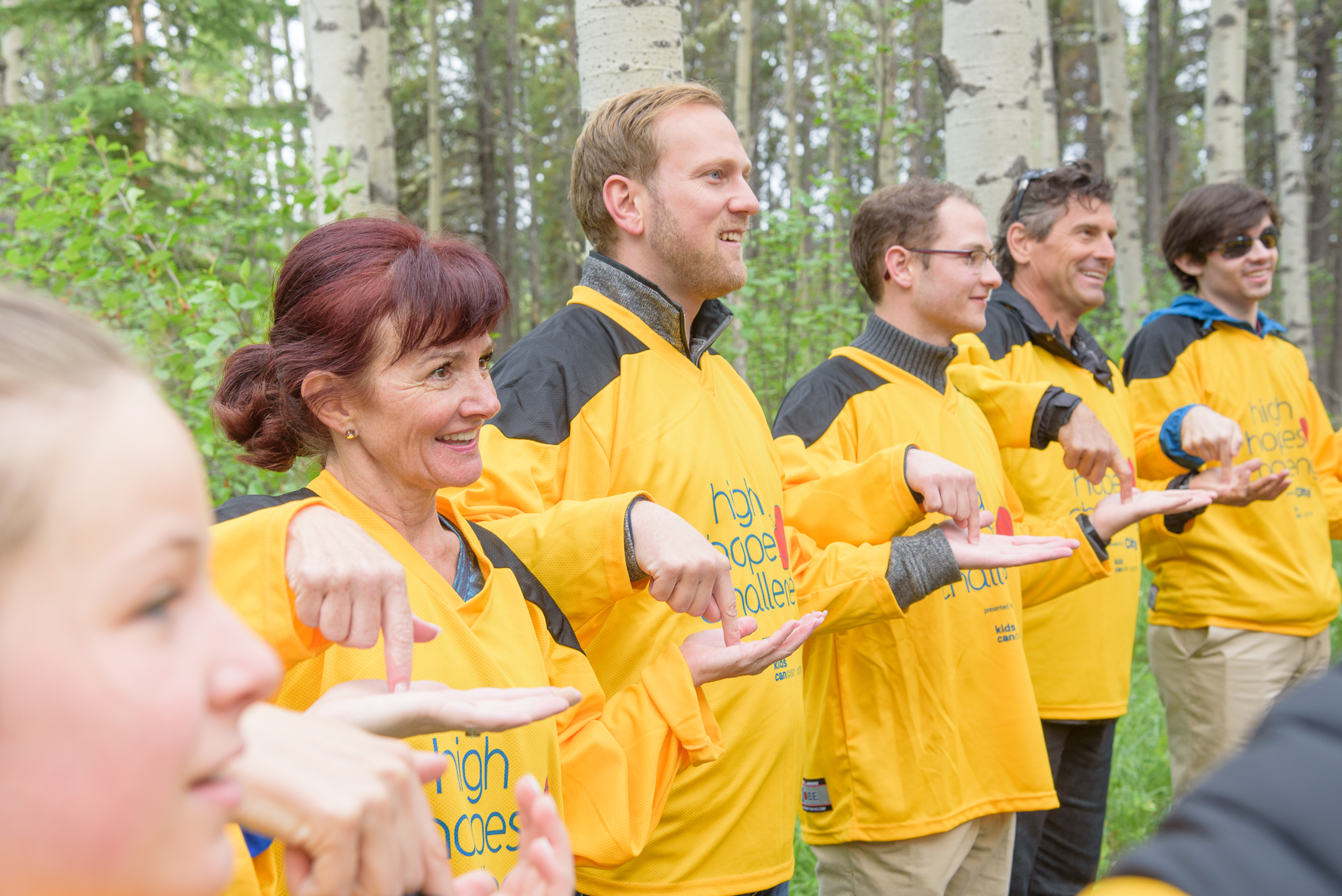
Iggy participates in an initiative at the 2015 High Hopes Challenge
Iggy took part in the 2015 High Hopes Challenge, raising over $20,700 doubling his $10,000 fundraising goal, before he and the other challengers headed for Camp Kindle to master the challenge course with their kid coaches.
Iggy is also an active member of the Kids Cancer Care Board of Directors, where he is the volunteer chair of our fundraising committee. As a member of the board, Iggy and the other board members are responsible for the financial oversight and strategic direction of the foundation.
“When we came to Kids Cancer Care in 2010, we were looking for a partnership, something where we could be fully integrated with the charity’s mission,” says Iggy. “We originally chose Kids Cancer Care because they met certain criteria, but we stay because of who they are as an organization. We share the same culture of fun and our staff has really identified with their work and cause.”
Indeed, even children of Tundra staff are getting involved. In 2014, eight-year-old Kaydence asked her friends to donate money to Kids Cancer Care in lieu of birthday gifts. The daughter of Casi Simcoe, an accountant at Tundra, little Kaydence raised $110 to help kids with cancer.
And, of course, Tundra matched every dollar she raised.
Kaydence donates to Kids Cancer Care
Curling Bonspiel
Tundra Stampede Breakfast 2014
Tundra Stampede Breakfast
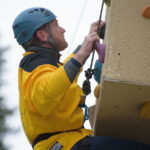
Iggy takes on the Camp Kindle climbing wall
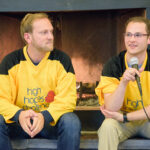
Iggy and Sean share their magical moments at Camp Kindle
Mason’s journey began in December of 2013 when a large lump appeared on the right side of his neck. I will never forget how my stomach dropped when I saw this mass. It instantly scared me. I contacted my husband Diego at work, right away he could hear the fear in my voice so he dropped everything and we rushed Mason to the Children’s Hospital. They did a few tests, concluded it was simply an enlarged lymph node and sent us home with antibiotics. The next day, the hospital called with test results telling us he had strep throat, so they changed his antibiotics to something stronger. We thought this was a little odd as he had no strep throat symptoms, but we followed the doctor’s instructions.
Mason with his family.
The pharmacy had only half of the antibiotics we needed, so four days later we went back to pick up the rest. The pharmacist saw Mason’s lump, and alarmed at the mass, she first asked, “Is that what the antibiotics are for?” We nodded yes and she asked if it had gotten smaller. We responded, “No, it is getting a little bigger.” She directed us back to the hospital, because the antibiotics should have started to decrease the lump by then.
Back at emergency, we were told to finish the antibiotics as some take longer than others to take effect. We went home growing more and more anxious. That evening, Mason spiked a high fever and spent the night getting sick. In the morning, the lump was even bigger. We went back to the hospital for a third time that week wanting answers. Something was obviously wrong.
The medical staff at the hospital were stumped. All of Mason’s tests were coming back normal and he was feeling fine. We were referred to an ear, nose and throat specialist who eased our worry by telling us it was not the big bad ‘C’, but simply a swollen lymph node full of clear fluid. Because it was just before Christmas break, it was decided to re-evaluate the lump in the New Year. As we were putting our jackets on to leave, the doctor called us back into the room, offering to give us some peace of mind over the holidays. He offered to prove the lump was just clear fluid by putting a needle in the lump and extracting what was in the lump. So, four of us held Mason down. The needle went into his neck, and again but the doctor could not extract a thing. The room instantly went cold and tense. The doctor quietly walked me back to reception and gave us his fist appointment after the holiday break, while Diego snuggled with Mason, trying to calm him down.
Mason and Mom
Christmas was cautious. I know that may sound funny; we all tried hard to make the best of the holidays, but in the back of our minds we were terrified. That lump continued to grow and, as parents, you simply fear the worst.
January 8th, 2014 we met with the ear, nose and throat specialist again. He took one look at Mason’s neck and said it had to be taken out ASAP.
Two days later, on the 10th of January, Mason had the lump removed in day surgery, a procedure that felt like it took forever. At 2:41 pm we were asked to come into a little office where we were told they had performed a freeze screen test in the operating room and confirmed it was lymphoma cancer.
Mason was six that day in January. Telling a six-year-old he has cancer, what cancer is and what could possibly happen to him was an out of body experience for me. He’s six. How is this possible? He is only six. Our world spiraled out of control. The next eight hours were filled with meeting the oncology team, answering a lot of questions, hearing a lot of information I could not possibly understand and a lot of disbelief.
We were able to go home for a couple of days after that first surgery and before being admitted to the oncology unit. Mason had a lot of questions; we did our best to answer them. But mostly, we snuggled, cried and did our best to prepare for the battle ahead.
The next week, all the tests necessary to determine his complete diagnosis were done: bone marrow, CT scans, ultrasounds, X-rays, countless blood tests and a lymph node biopsy from a slightly larger node on the other side of his neck.
We finally received his complete diagnosis on Wednesday, January 16th. Mason had stage 4 Burkitt’s lymphoma. He tested positive for Burkitt’s on both sides of his neck and 5 per cent in his bone marrow. Of course, we jumped on the computer and googled Burkitt’s. Pictures for Burkitt’s are shocking. Researching what our son had and what the treatment might entail kept us up all night. We cried harder and longer that night than any other time; not our son, not our six-year-old baby.
The next morning brought a new determination; there were no options in this journey. We had to win. And with that determination, Team Mason was born. Our family of four, our extended family and our incredible friends all became part of that team.
One of many days spent at the hospital.
Mason went through five rounds of extremely intense chemotherapy. Each round brought on different challenges, but Mason never ever quit. He didn’t want to do it for one more second, but he never quit. He was aMazing. He is the bravest person I know.
The Alberta Children’s Hospital is such an amazing place. Not a place any family wants to know well, but we are so lucky to have it here in Calgary. We met many incredible people on unit one: doctors, nurses, families, volunteers and organizations. Being on that unit was humbling to say the least. It really grounded us and made us realize how fortunate we really were. When we first arrived, we thought our world was crashing down; however, when we found out Mason’s complete diagnosis and treatment plan, we were certain Mason was going to beat his cancer. We met so many other families who did not know their future. I can not possibly imagine their fear and pain.
We spent 60 nights at the hospital in unit one. It became our home away from home.
On May 14th, we heard the magical words every oncology family dreams of hearing: “Mason is in remission.” He then went through his last round of chemo, like a champ. He strolled into that unit, said “Hi” to all the ladies in the nurses’ station, walked into his room and started to set up his bed and room the way he likes it. Through that week, he showed everyone his magic tricks and told them all his jokes, something he never did in the previous rounds. He was in a good space and knew what to expect.
Mason’s last chemo in May 2014.
On May 21, 10 days before his seventh birthday, he had his broviac line removed. Forty eight hours later, he was able to lay down in a bath for the first time in months. He lay in that tub until the water went cold. I will never forget the look on his face that day. There was so much peace.
We have spent our days since then trying to find our new normal, finding joy in every day. Although that year was the worst year ever for us, we really are the lucky ones. Our family is whole and we count our blessings every day for that.
One of our normals includes being part of the Kids Cancer Care Foundation of Alberta, an organization we are so lucky to be part of. They include us in so many amazing activities and events, but the very best one of them all is Camp Kindle. This past summer our boys were able to go to camp again. Bennett and Mason LOVE camp. They meet kids who know exactly what life with, during, and after cancer is like. They meet lots of kids and quickly make life-long friends. They swim, hike, sing, laugh and have genuine fun.
Diego and I have also been to Camp Kindle ourselves, once for Family Camp and once for Survivor Day. What a magical place. The peaceful environment overtakes any stress or outside noise in your head. If you ever get a chance to visit, go. You’ll know exactly what I’m talking about.
Mason and Bennett love going to Camp Kindle.
Kids Cancer Care isn’t just about the delicious pizza they deliver every Wednesday on the unit at the hospital and camp though. This incredible organization has done so much for our family. They filled our freezer with delicious food when Mason was in treatment. They include families in so many awesome Kids Cancer Care events — theatre tickets, sporting events, going to the North Pole on the Polar Express, galas, even golf tournaments.
Meeting other families who have experienced a lot of what we have gone through is also something we truly cherish. We have become part of this incredible family none of us really wanted to join, but we all feel so lucky to be part of. Kids Cancer Care also always include siblings, which is so very important because brothers and sisters go through the horrors of the cancer journey too. They witness many things kids shouldn’t see. Bennett was with his little brother every step of the way, holding his hand and encouraging him every day. Bennett was Mason’s biggest fan. Mason is lucky to have such an amazing big brother.
Mason and Dad Diego on The Polar Express with Kids Cancer Care.
Another reason we love Kids Cancer Care so much is that they continue to keep us part of the programs and activities even after treatment is over. They know that even when chemotherapy, radiation or transplants are done, our journey along the medical path is far from over.
Hopefully there will be a day in the near future when pediatric cancer is extinct, but until then, organizations like Kids Cancer Care need your support to help families like ours to find peace, joy and love again during and after the horrific diagnosis of childhood cancer. We truly don’t know where we would be without their incredible support system.
We will never be able to thank Kids Cancer Care enough, or be able to express how much gratitude we have for Kids Cancer Care. Thank you Kids Cancer Care for all you do for us and all of the families you take care of.
~Jennifer Rodriguez, Mason’s Mom
“I ask myself sometimes in difficult moments: ‘What would Edyn do? How would Edyn handle this?’ I believe this is what Edyn would do. She would reach out and help others. To remember Edyn is to keep her spirit alive and this head shave in her name for other kids with cancer is the perfect way to do it.”
Those were the words of thirteen-year-old Cole Pederson, before the kickoff event for the Bishop Pinkham Junior High Shave Your Lid for a Kid® event in memory of one of his best friends, Edyn. In the coming weeks, our staff would find themselves both blown away by the fundraising support for Kids Cancer Care and overwhelmed by the sheer number of students whose heads we had to shave. We were given a window of two hours to shave or cut the hair of 100 students, teachers and parents. And we had to keep a gymnasium full of junior high students engaged in the event. The largest school event previous to this had less than half the participants. How were we going to make this happen?
Shave Your Lid for a Kid® show children facing cancer that they are not alone, all while raising vital funds for initiatives like research to change the course of the disease. “Shavees” as we call them come together in a community of support.
Our presenting sponsor of Shave Your Lid for a Kid®, Trico Homes, is very familiar with building communities. Founder Wayne Chiu has always known that his company is more than building the physical structure of a house.
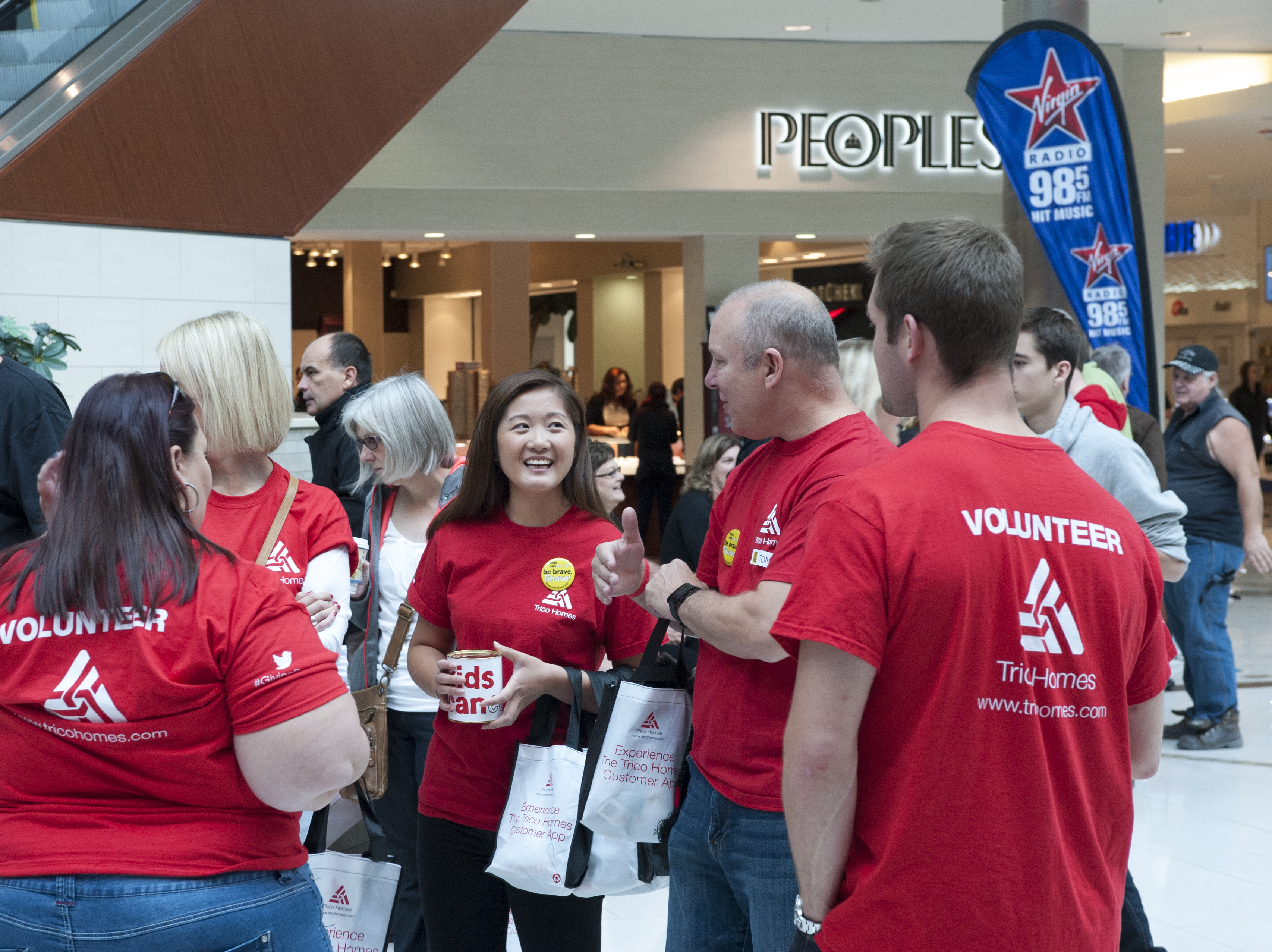
Trico Homes volunteers and fundraisers at the 2nd Annual Community Shave in 2014.
Trico believes in building community. “When you build with us you quickly become part of the Trico family. We keep in touch with our homeowners and try to provide great incentives and opportunities for them to move up within Trico – from condos to semi-estate homes.” says Wanda Palmer, Vice President of Marketing for Trico Homes. “We also want to create housing options to meet the needs of all Calgarians. Trico recently broke ground on a new project that will provide new affordable and accessible living options in an inner city community. Social entrepreneurship is one of Wayne’s passions and this thinking has contributed to shaping the culture of Trico Homes.”
It was this passion that brought Wayne into his first meeting with Kids Cancer Care founder and CEO Christine McIver in 1999. After finding out that the children of two of his business contacts had been diagnosed with cancer, he knew he had to do something.
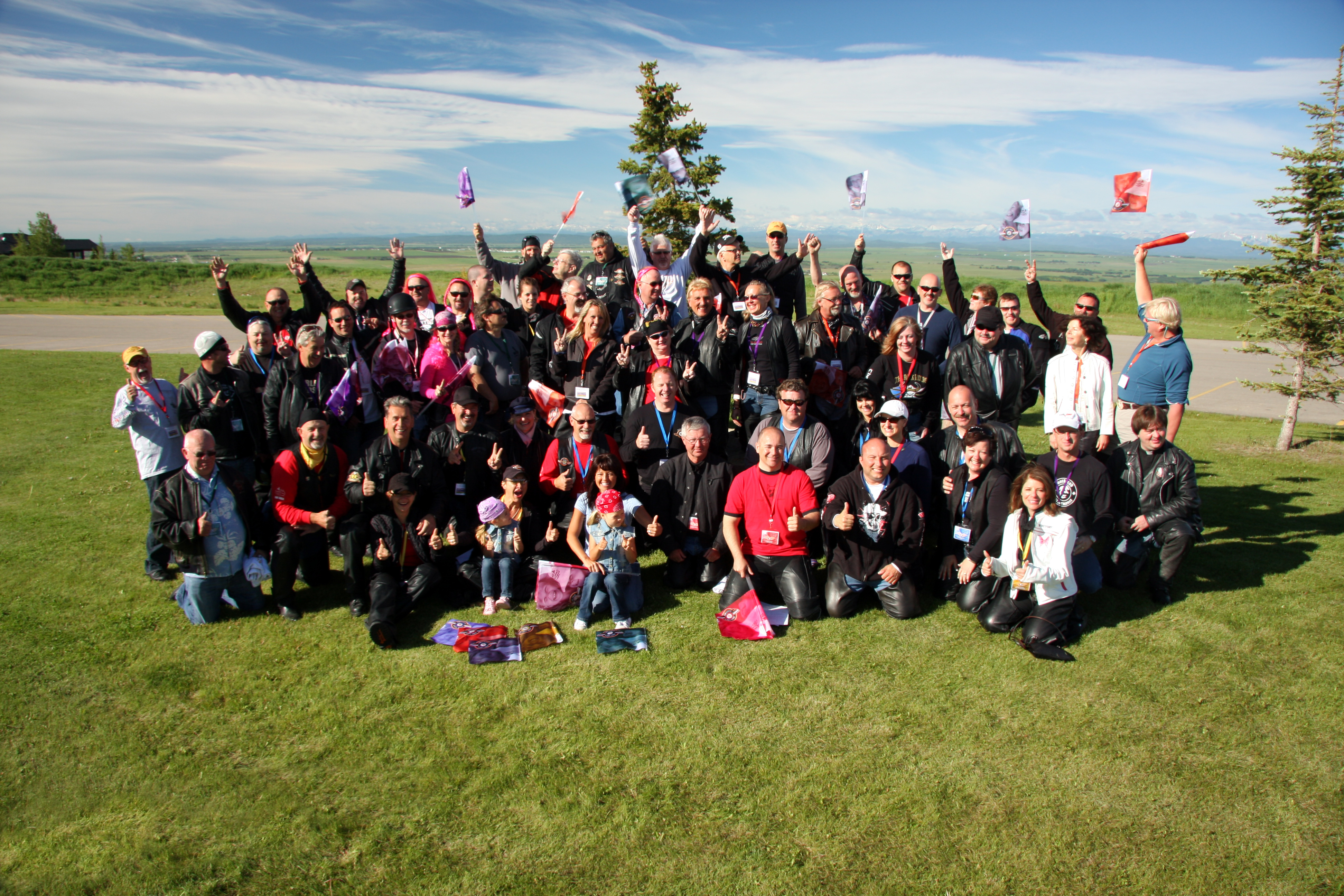
2010 Ride for a Lifetime group shot.
“Wayne wanted no fanfare. He just wanted to help,” says Christine. “One of his employees suggested doing a motorcycle ride to raise money. In the inaugural year of Ride for a Lifetime, Wayne sponsored every rider for $1000.” A Kids Cancer Care signature event for 10 years and now a third party fundraising initiative, the Ride for a Lifetime has since raised over $2.6 million for pediatric cancer research programs.
For almost two decades, Trico has been heavily involved behind the scenes in Kids Cancer Care’s growth. Trico Homes has been the presenting sponsor of the Shave Your Lid for a Kid® since its inception in 1999. After sponsoring Ride for a Lifetime for a number of years, when Kids Cancer Care began supporting childhood cancer research, Wayne committed to giving $100,000 a year to research. Trico then became the presenting sponsor of the Don, Joanne and the Coach Golf a Kid to Camp tournament. When Kids Cancer Care began exploring the possibility of running Camp Kindle as a social enterprise, the Trico Foundation gave Camp Kindle its first grant.
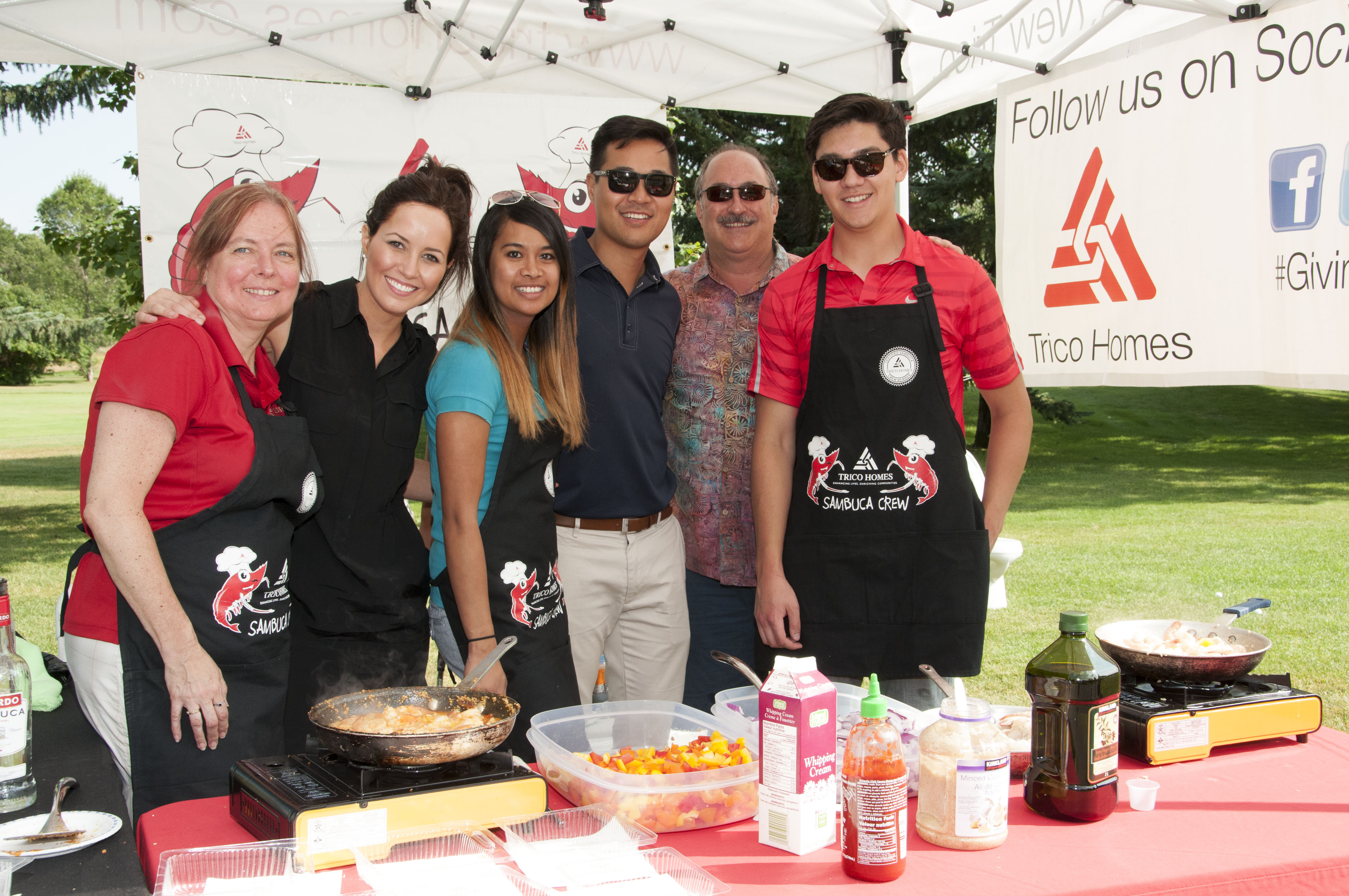
Volunteers on the Trico Homes hole at the Don, Joanne and the Coach Golf a Kid to Camp tournament
Christine says, “They gave us the courage to add the pillar of research to our organization, they gave us the courage to embark on a new signature event, Ride for a Lifetime, and the courage to start a social enterprise with Camp Kindle rentals. The impact of Trico Homes on Kids Cancer Care far surpasses their financial commitments. You don’t get a community without family and Trico is definitely a part of our family.”
You can always count on family to be there for you at every major milestone and event.
“Our staff really appreciate going out to volunteer at head shaves and the golf tournament,” says Wanda Palmer. “I send an email and almost immediately, the volunteer spots are filled.”
Wanda herself is one of these volunteers. Wanda volunteered to represent Trico Homes at a High Hopes Challenge, raising over $10,500 for Kids Cancer Care, and being paired with a bereaved sibling to experience a week of camp in one day.
Wanda Palmer and her High Hopes Kid Coach, Ali.
Everyone at Trico Homes is given the chance to volunteer and participate. They mandate sending different staff, from all departments and seniority levels, to the Don, Joanne and the Coach Golf a Kid to Camp tournament each year. Everyone is given the chance to experience the Kids Cancer Care community.
So in April 2015, in the Bishop Pinkham gymnasium, when faced with the largest event in the 17-years of Shave Your Lid for a Kid®, there were some familiar faces in the crowd. As they always were, no matter the size of the event, Trico employees were there to help. We put them to work handing out goodies to all the shavees and we even encouraged them to partake in the flash mob!
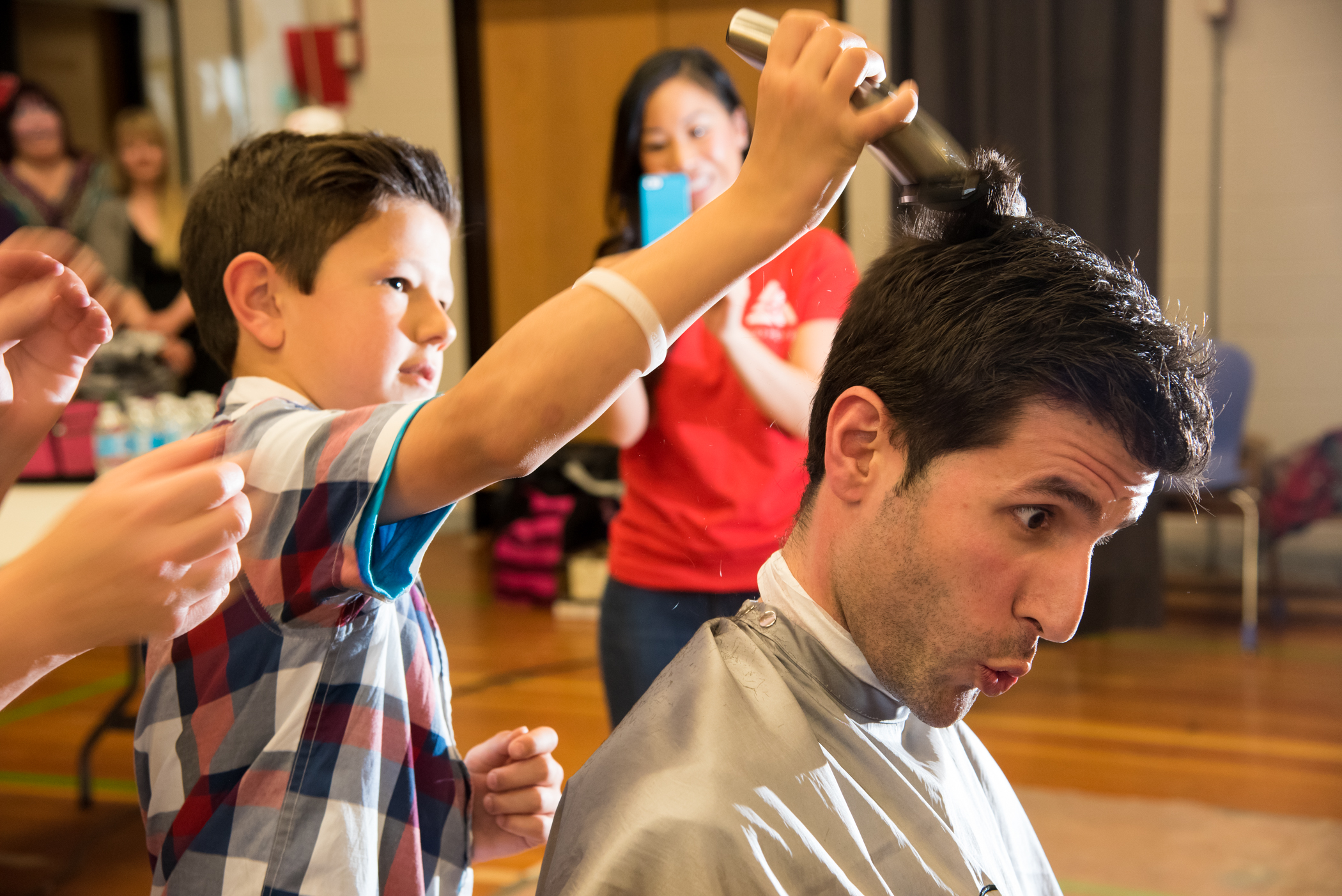
Trico volunteer takes a photo of Edyn’s brother shaving a teacher’s head at Bishop Pinkham Junior High in 2015.
Trico Homes knows how important volunteering and seeing the return on their social investment has on their employees. Kids Cancer Care is so grateful to Wayne, Wanda and the entire team at Trico Homes for their continued dedication to families affected by childhood cancer!
2005 Ride for a Lifetime representatives from Trico Homes
2010 Ride for a Lifetime
Trico group at the 2014 Don, Joanne and the Coach Golf a Kid to Camp tournament
Wanda speaks at the 2nd Annual Community Shave.
Parade past the Trico Homes Shave Your Lid for a Kid® banner at Bishop Pinkham in 2015.
4th Annual Community Shave.
Trico Homes hole at the 2014 Don, Joanne and the Coach Golf a Kid to Camp tournament.
Wanda and Ali at The High Hopes Challenge in 2015.
Trico Homes hole at the 22nd Annual Don, Joanne and the Coach Golf a Kid to Camp.
Trey Elkins has always wanted to do more.
Growing up in Mississippi without a father, Trey wished he had a dad to take him fishing. He wanted a dad to teach him new things and take him to new places, but that wasn’t possible because cancer had taken his father away when Trey was five.
After losing their home to Hurricane Katrina and moving to Alberta, Trey found himself battling the same disease that took his father’s life. Stuck at the hospital, Trey longed to be outside, hanging with his friends. He wanted to be anywhere, but the hospital. Again, that wasn’t possible because Trey needed 29 rounds of chemotherapy and eight surgeries to survive.
After treatment, as he grew stronger and healthier, Trey still longed to do more. That’s when he made a promise that he would do more, for himself and others, with the life he was given.
Thanks to you, this time, it’s possible for Trey to do more.
With the help of a Kids Cancer Care Derek Wandzura Memorial Scholarship, Trey studied Advanced Care Paramedics at SAIT. He now works at Advanced Paramedic Ltd., a company that provides air ambulance EMT and paramedic services to remote areas for Alberta Health Services.
“I’m pretty fortunate to land this job,” says Trey. “A big part of me getting it was the scholarship and volunteer work I’ve done with Kids Cancer Care.”
Trey also credits his mother Kim for his success. He recalls one night at the hospital when he was having a particularly tough time – the inevitable “Why me?” moment. “My mom looked at me and said, ‘Trey, you’ve been through a lot. This whole family has, but there is always someone worse off. Don’t you forget that.’” He didn’t forget.
Trey’s mother wasn’t exaggerating for effect. They had faced unthinkable adversity. After losing her husband Bill to cancer, Kim and her boys lost their beautiful waterfront property in the aftermath of Hurricane Katrina. This was the home she had struggled for years to keep through refinancing, foreclosure notices and living pay cheque to pay cheque. Flooded in seven feet of Mississippi mud and water.
After losing everything in the flood, Kim moved her family to Alberta, seeking a new start and an end to hardship. Not long after settling in Airdrie, Trey was diagnosed with stage four osteosarcoma. He was 14.
By the time Trey was ready for college, the family was experiencing a serious financial setback. As an American citizen, Trey was also facing hefty international student fees and tuitions to attend a Canadian post-secondary school.
The Kids Cancer Care scholarship that you made possible could not have come at a better time.
“My oldest brother had given me all the money he could,” says Trey. “My mom was paying most of my bills. Even my girlfriend’s parents loaned me some money. I was broke. If it were not for the scholarship I received and the generous amount that it was, I would have had to drop out of school.”
Thanks to you, in his last year of school, Trey had a Kids Cancer Care scholarship in the bank, a mother’s wisdom in his heart and a powerful desire to do more with his life.
“My story isn’t exceptional,” says Trey. “Anyone who endured what I have would emerge from their struggle with a new outlook on life. I kept my resilience by recognizing that people around me were suffering and I began to focus on relieving the suffering of those around me.”
That’s why Trey was in Fort McMurray, providing medical support to victims of the wildfires in 2016 and why he volunteers as a trainer for a high school football team. And that’s why Trey volunteers as a medic and spokesperson for charities such as Kids Cancer Care, the Alberta Children’s Hospital and the Alberta Cancer Foundation. He’s determined to do more.
“It has been amazing to be recognized nationally for this research but more important, is knowing that the research may actually have potential in the real world.” ~ Colette Benko
Colette Benko isn’t your average 15-year-old. Not because she’s already conquered cancer once, but because of her scientific mind and insatiable curiosity. If Colette has it her way, she’ll be conquering cancer the rest of her life, but this time, it will be from the inside of a research lab.
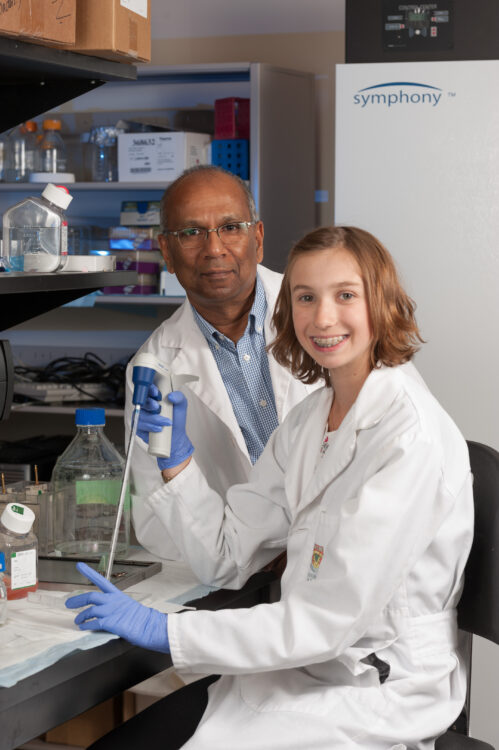
Thanks to you, Colette was able to start feeding her curiosity while working as a summer research student in Dr. Aru Narendran’s laboratory at the University of Calgary. But this wasn’t the first time Colette had been in a research lab.
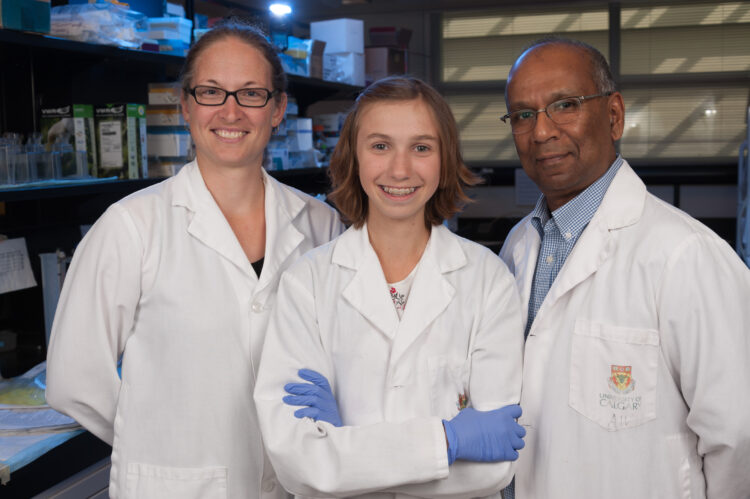
Colette Benko is enjoying a productive mentorship with University of Calgary researcher Dr. Aru Narendran.
For the past two years, Colette has been enjoying a rewarding and successful mentorship with Dr. Narendran, a pediatric oncologist at the Alberta Children’s Hospital and an Experimental and Applied Therapeutics (ExpAT) researcher in the Childhood Cancer Research Program at the University of Calgary.
Colette first met Dr. Narendran at the Alberta Children’s Hospital when she was being treated for synovial sarcoma, a cancer of the joints and soft tissue.
“I’ve always been a science nerd, but I had never done a medical science research project,” says Colette. “When Dr. Narendran found out that I love science so much, he agreed to mentor me. He’s been a great mentor. He’s so kind and patient and he’s so committed.”
“When Colette talked to me about wanting to do research in our laboratory I was impressed by her extraordinary self-assurance, energy and keenness,” says Dr. Narendran. “She reminded me of that Ivern Ball quote, ‘Knowledge is power, but enthusiasm pulls the switch.’”
The outcome of that enthusiasm has been two award-winning research projects for Colette.
Last spring, she won a silver medal for excellence in the 2016 Canada-Wide Youth Science Fair and a $2,000 scholarship for her research into a potential new therapy for neuroblastoma, a cancer of the sympathetic nervous system often found in infants and young children. In 2014, her research into an extremely rare and aggressive brain cancer in infants called ATRT won gold in the Calgary Youth Science Fair.
“It’s so incredible to work in a lab,” she says. “To actually experience and see results, not just read about it, is so satisfying.”
Colette is especially excited about the results of the neuroblastoma research, because it may actually have practical application in the world of pediatric cancer one day.
“It has been amazing to be recognized nationally for this research, but more important, is knowing that the research may actually have potential in the real world,” Colette says.
Working with students in Dr. Narendran’s lab, Colette was studying a unique new drug against three types of neuroblastoma and found that it inhibited growth in all three by stopping the action of a protein called EZH2, which is involved in blocking tumour suppressor genes.
“Normally, our cells rely on a group of molecules called tumour suppressor genes, which constantly act to prevent malignant changes in cells, by causing them to self-destruct,” she says. “But some tumour cells overproduce a protein that actually turns off tumour suppressor molecules, so the cancer cells continue to grow. The drugs we’re studying, known as the EZH2 inhibitors, aim to block this abnormal mechanism in neuroblastoma cells.”
When Colette presented her findings at the 2016 Canada-Wide Youth Science Fair, researchers investigating similar ideas were excited to see her data, as this drug has also shown effectiveness against pediatric brain tumours.
Still in the early stages, Colette’s findings seem to suggest that the drug may not only be inhibiting cancer growth; they may actually be inducing cellular death in the neuroblastoma cells. Another promising attribute of the drug is it doesn’t seem to attack regular cells, which could mean fewer side-effects for patients.
Working as a summer research student in Dr. Narendran’s lab this year, Colette was able learn more about the necessary processes involved in conducting cancer research, while also developing her understanding of the biology of various pediatric cancers.
Colette also continued generating data on her neuroblastoma project, testing whether the drugs are actually capable of inducing death in neuroblastoma cells and assessing what effect, if any, they may have on non-cancerous cells.
After graduating from high school, Colette plans to take her quest for a cure even further. She plans to pursue a Bachelor of Health Sciences at the University of Calgary and follow that with post-graduate work in pediatric cancer research.
Thank you for making our summer student research program possible. While providing scientists with much-needed help in the lab, the program helps ensure that promising young research talent is nurtured for tomorrow.
Drs. Vanessa Meier-Stephenson(L) and Dr. Aru Narendran (R) have been mentoring Colette Benko, a summer research student, in their University of Calgary laboratory.
Thank you to our generous fundraising partners who make our programs and services possible