“Kids Cancer Care is the smile you haven’t seen on your child’s face for a while. Their worries melt away and you get to see that happy smile again.” — Kaila
Jack
and his twin brother Adam had just celebrated their first birthday. They were busy
little guys, following in the footsteps of their big sisters Aiya (3) and Nora
(2). Jack and Adam were both walking at 10 months, so when Jack suddenly
stopped walking and reverted to crawling, his parents Kaila and Calvin Harapnuk
were concerned.
Although
they were worried, it wasn’t the crawling that troubled them most. Jack had stopped
sleeping at night. “He was fine during the day,” says Kaila. “But he wouldn’t
lie down to go to sleep at night. One of us had to hold him upright or he’d cry
all night.”
“We
could see he wasn’t as happy, but we didn’t know what was going on,” says
Calvin.
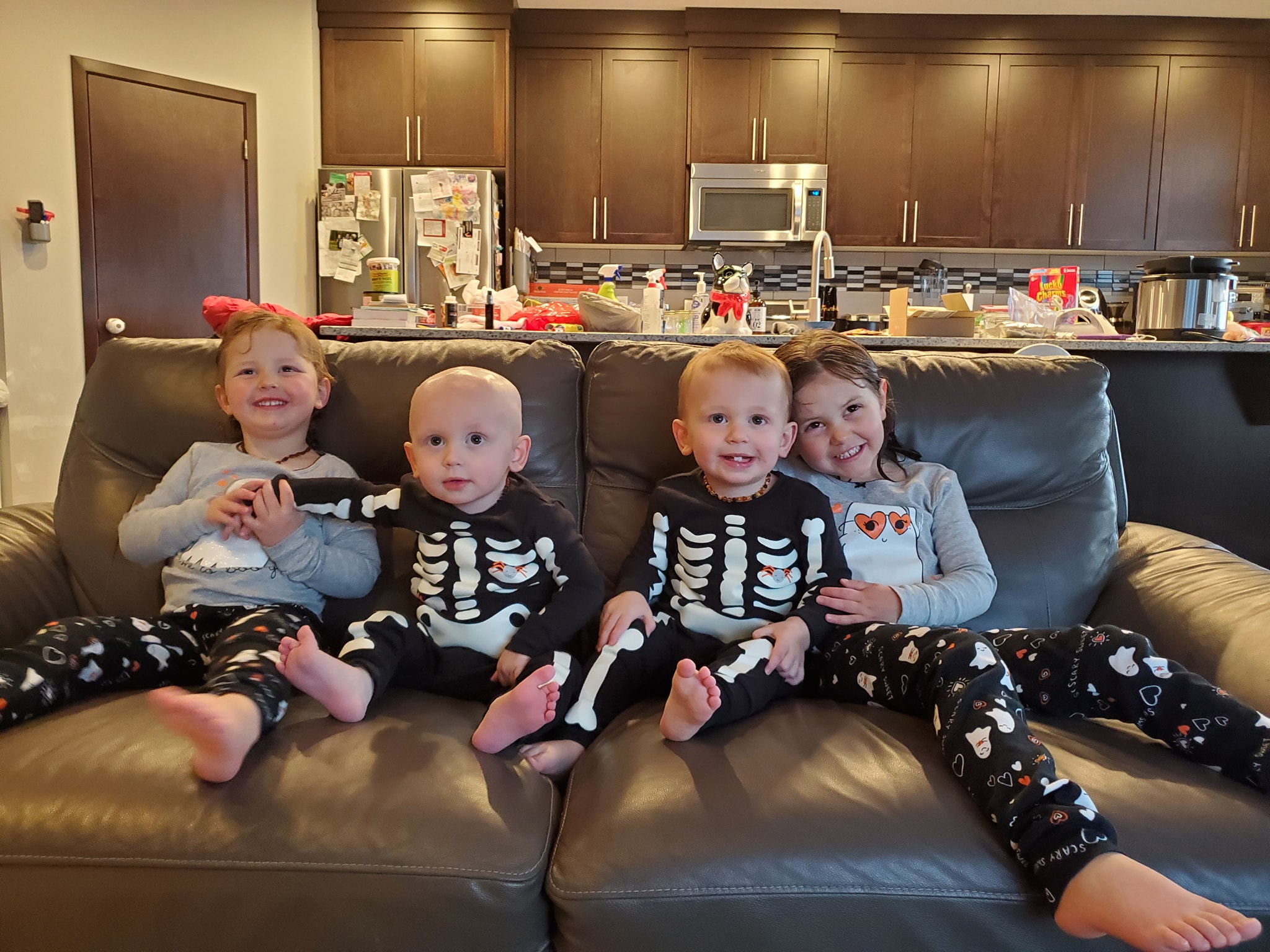
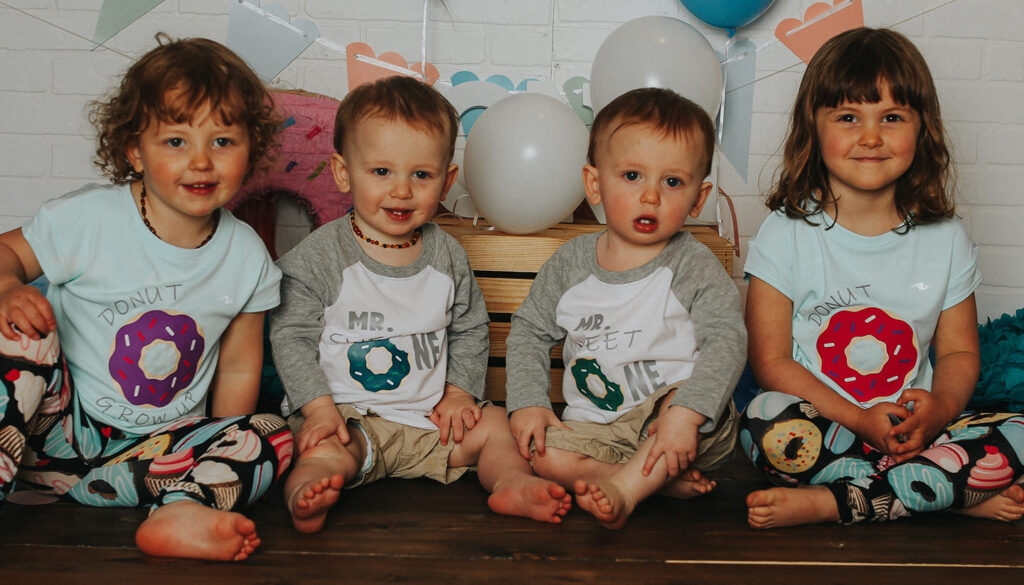
Jack with his twin brother Adam and sister Aiya and Nora
As
the nights grew worse and Jack’s distress melded into days, the Harapnuks grew
increasingly concerned and took him to see a pediatrician. The pediatrician
thought Jack may be experiencing joint pain from a build-up of inflammation
from a cold.
On
the August long weekend in 2019, the Harapnuks were referred to emergency
services at the Alberta Children’s Hospital. The consensus seemed to be that it
was joint pain from a cold, but the neurologist on duty wasn’t comfortable
sending Jack home, so he ordered an MRI for the next day.
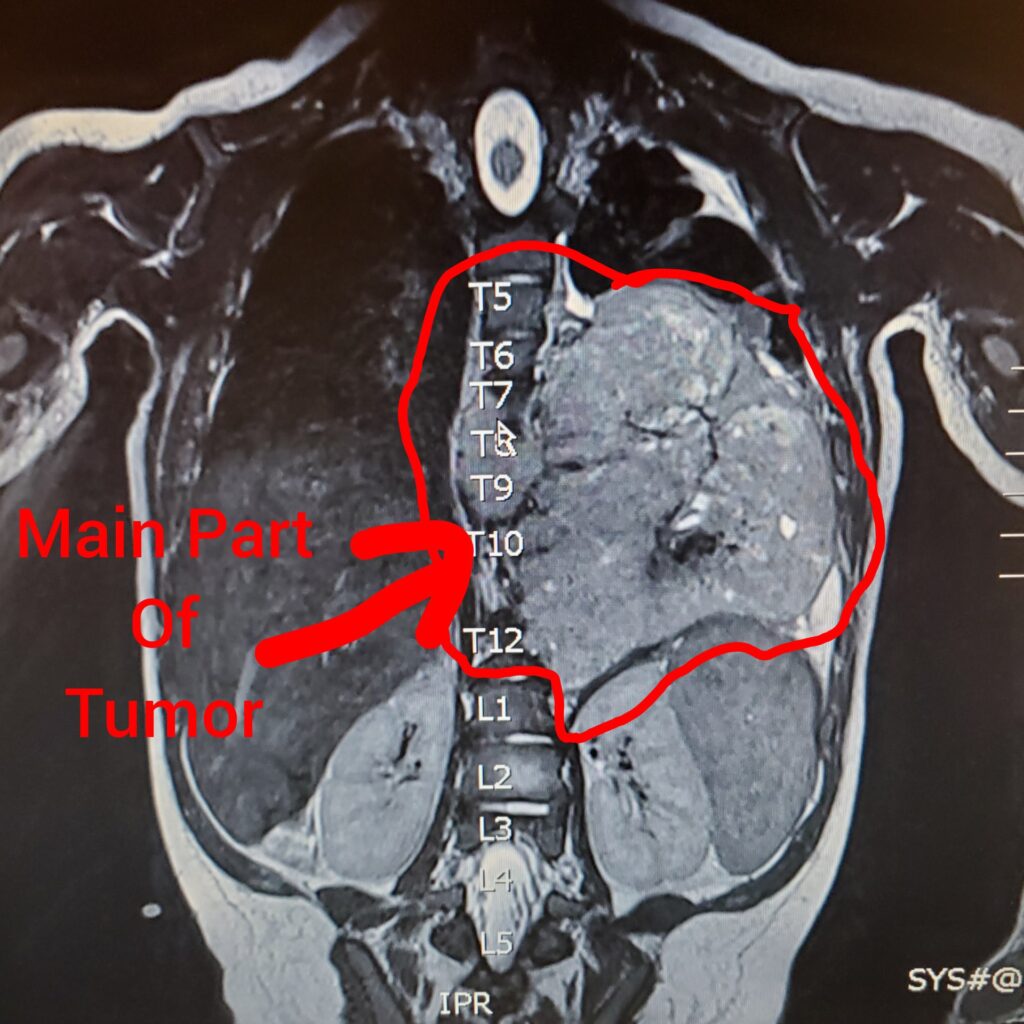
The
MRI revealed a massive tumour encompassing the entire right side of his
abdomen. Jack had stage 4 neuroblastoma. They started him on emergency
chemotherapy the next day. The goal was to shrink the tumour with chemo and later
remove it in surgery.
Main part of the tumour
Jack
would spend 200 days in the hospital, undergoing multiple surgeries and
multiple rounds of chemotherapy and radiation. There were many scary times when
it looked like Jack may not make it — when his white blood cells were
dangerously low or when his oxygen levels were plummeting, and he needed to be
intubated in the PICU. These frightening moments were woven with interludes of
hope and prayer.
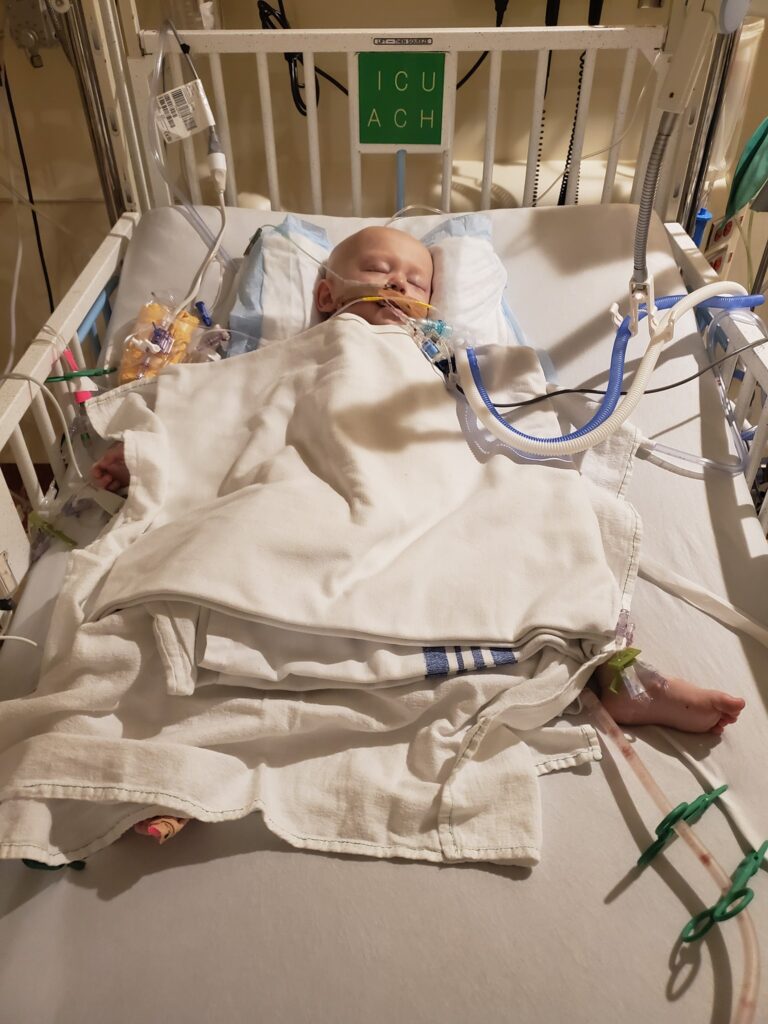
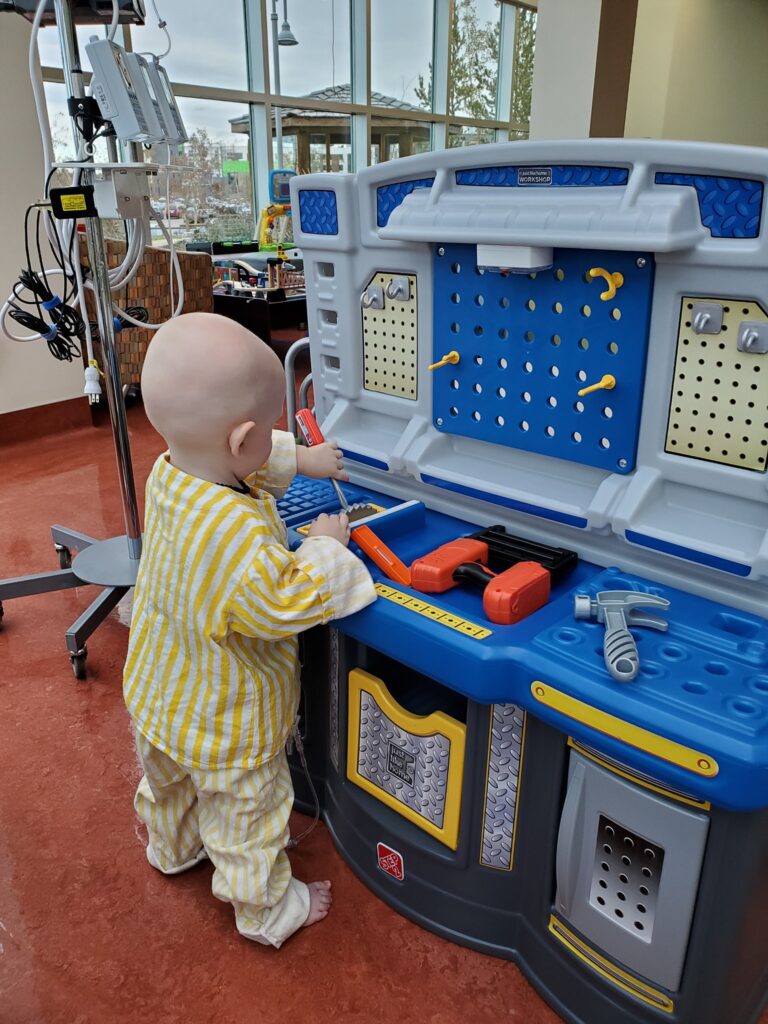
Jack at hospital during his treatment
Calvin
would take a short leave from work while Kaila paused her home-based business. With
four children under the age of five, juggling work, household duties, and
extracurricular activities while also caring for a child with cancer was
emotionally and logistically overwhelming.
Caring for a child with cancer is like living in pandemic times. Families are forced to isolate for months at a time because a cold or flu could be fatal for a child with compromised immunity due to chemotherapy. As the eldest child in the Harapnuk household, Aiya understood more about Jack’s cancer experience. Her role as the responsible big sister was reinforced and she became a bit of a worrier.
Jack at hospital
The family got to know about Kids Cancer Care and started participating in the programs. Pizza Nights and Cooking and Caring programs were a big help to ease the load by giving Mom and Dad one less thing to worry about. “Pizza Nights were such a gift,” recalls Kaila. “It was often the only thing Jack would eat. He couldn’t actually go right into the Sunshine Room, but his tube could stretch from his room to the doorway of the Sunshine Room, so parents from the Kids Cancer Care community used to come and sit outside the doorway and chat with us. It was our socialization for the week.”
“Cooking
and Caring meals were huge!” says Calvin. “Kids Cancer Care knows what’s going
to happen to a family when a child is diagnosed with cancer. As a new family,
you have no idea what to expect but Kids Cancer Care does, and they think of
everything.”
The
Beads of Courage program is designed to help children understand what’s
happening to their bodies by giving them a tangible way to record their
experience. Each bead represents a treatment or milestone on the journey. When
a child is too young to make the Beads of Courage, his family can help record
the journey for him. Jack’s Beads of Courage are exceptionally long because his
cancer treatment was complex with many surprises and setbacks. “Jack is so
proud of beads,” says Kaila.
Jack’s family was a part of many programs throughout the years. “We are so thankful to Kids Cancer Care for making it easy for us to do family things together and not worry about the financial burden,” says Kaila. “We were able to do the Polar Express with the whole family and take the girls to Theatre Calgary to see A Christmas Carol. Now more than ever we realize how important every minute is that we get to spend with all our kids as time is so valuable right now.”
The
full extent of Jack’s side effects will develop over time. He has permanent
hearing loss and while he is Adam’s identical twin, he will always be smaller.
With so much time on treatment, Jack has some catching up to do. His balance
and coordination are off and he gets tired more easily. With your support, Jack
is rebuilding his strength through one-to-one sessions with our Ph.D. exercise
specialist and attending group exercise sessions with his siblings.
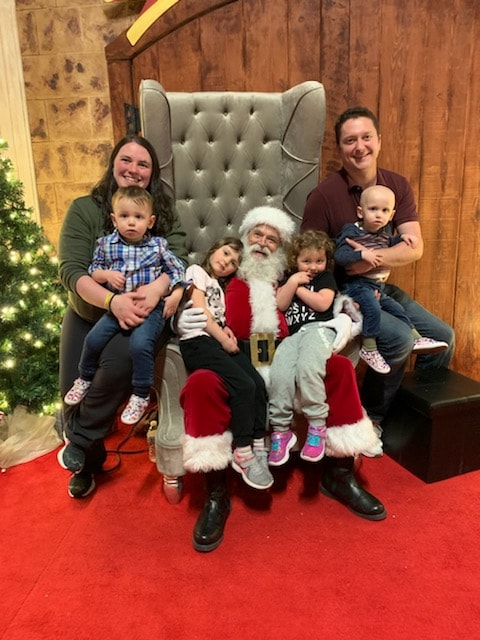
The Harapnuks at Cool Yule Festival
“They focus mostly on Jack at PEER, but his brother and sisters participate too,” says Calvin. “Jack will do it because they do.”
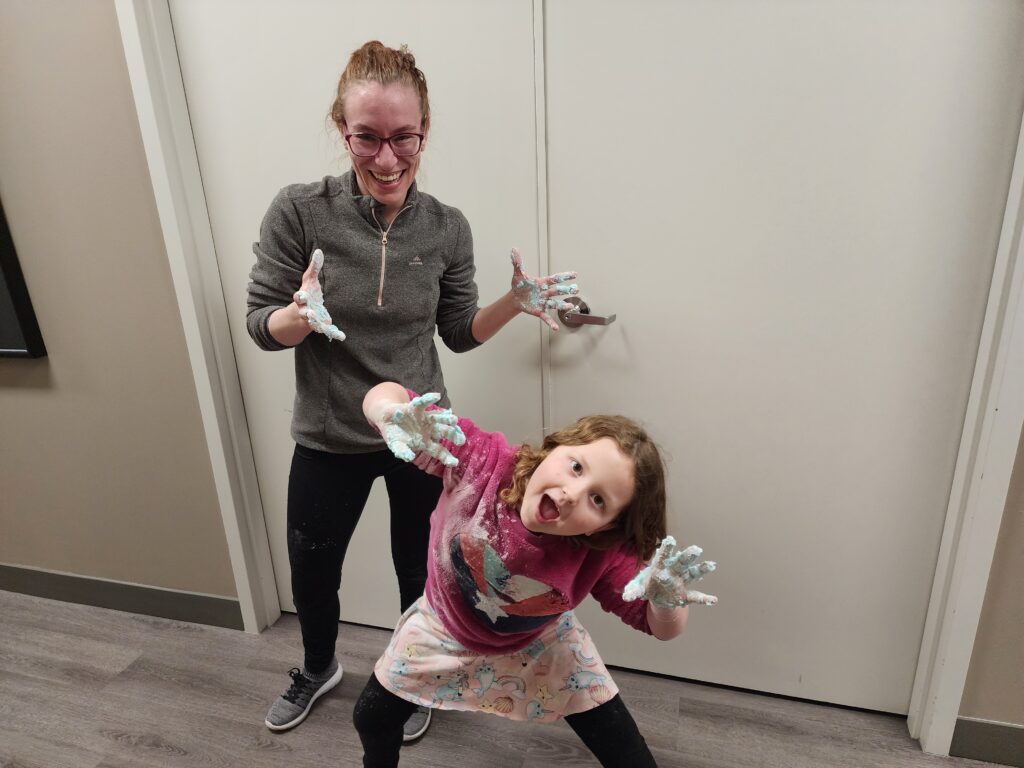
Aiya and Nora are working with our child life specialist to understand and process their feelings. They talk about cancer and Jack’s cancer treatments. They also make slime, stress balloons, and bubbles, which they use to help manage their feelings. Aiya and Nora also made paintings and a wooden car for Jack. Working one-to-one or in group settings, our certified child life specialist uses medical play to help children cope with medical tests and procedures. She introduces positive coping skills to transform the child’s fear and anxiety into a sense of control and, even mastery, over their experience.
Our camp programs are helping the Harapnuk kids to forget about their worries and be kids again. Aiya cherishes her newfound independence and the friendships she made at Camp Kindle. She came home with a Kindle Award, which she won for making sure everyone was involved in activities at camp. Jack, Adam, and Nora attend our SunRise day camp. With his siblings nearby, Jack is socializing more with other kids and becoming a little more independent.
Jack’s sisters during Sibling Support Program
Our parent programs offer parents a chance to enjoy a rare date night while having fun connecting with other parents in similar circumstances. “Calvin and I did the Parent Cooking Class at the Grey Eagle,” says Kaila. “It was really good. It was nice to spend time together as a couple again. We haven’t had much time as a couple.”
Jack’s
treatment took more than three years to complete. There were many touch-and-go
moments. While he and his mother were at the hospital fighting for his life,
his siblings were at home, missing Mom and Baby Jack. They missed precious time
with their parents, so crucial to their development.
“We haven’t been able to spend focused time with our children, doing their ABCs and numbers with them,” says Kaila. “Our tutor Polina meets one-to-one with both Aiya and Nora every Saturday. She’s amazing! And the girls love her.”
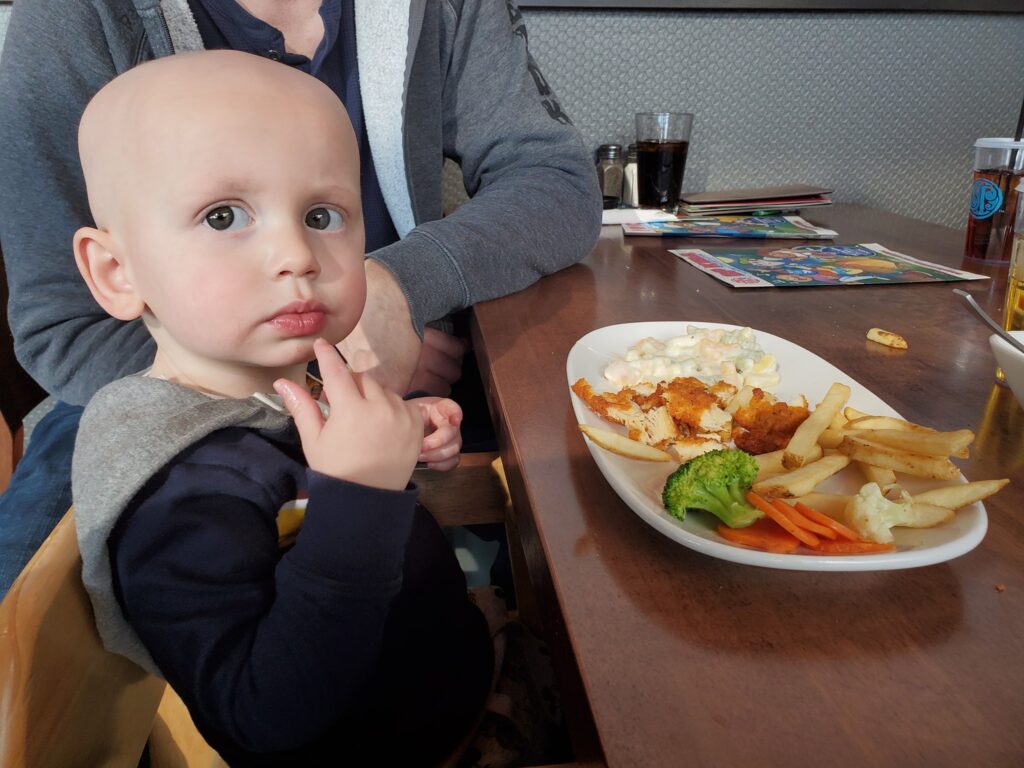
Jack at home
Jack hasn’t started school yet, but if he needs support in the classroom one day, our Cancer in the Classroom program will be there for him. Free to Alberta schools, the interactive presentation helps dispel the myths of cancer and fosters greater compassion and understanding in children.
Jack
wants to be a police officer when he grows up. Whichever career he chooses,
Kids Cancer Care will be there with a Derek Wandzura Memorial Scholarship to
help Jack prepare for that career with post-secondary education.
“If I die, really make sure, like make sure I’m not sleeping. If I go into a coffin to bury me, put a straw down just in case they made a mistake and I’m still alive. Or put a string down with a bell.” — Natasha.
Natasha Gould was 11 years old when she first started having conversations with her parents about her passing. She was energetic, whip-smart, and a natural leader. Natasha’s life was far too brief, but she found her purpose and lived it passionately.
The diagnosis
It was March 2015 when Natasha first started experiencing problems with her coordination and walking. She suddenly started tripping over her feet and falling. One day, she came home with a black eye from a fall.
When Natasha bolted down the
stairs one morning, asking, “Why didn’t anyone tell me my face was drooping?”
her mother Saskia Van Breevoort knew it was serious. “That’s it,”
she said. “We’re going to the hospital.”
That morning, Natasha and her mother went to the hospital. Natasha was whisked away for an emergency MRI that same day. Saskia went in to hold her hand because she was a little claustrophobic in tight spaces. By this time, Natasha’s father Bill Gould had arrived and was in the waiting room.
They learned that day on May 1, 2015 that their daughter had brain cancer. It was diffuse intrinsic pontine glioma (DIPG). DIPG is not a solid tumour. It is a diffuse tumour, so it is interwoven with healthy brain tissue, making it inoperable. They also learned that DIPG is largely incurable and has an average life expectancy of about 11 months.
“It’s very surreal when you get
that news, and you hear the words: ‘Terminal. 1% survival. No cure’,” says
Saskia.
“The doctor’s advice was to have
the summer of a lifetime,” Bill says.
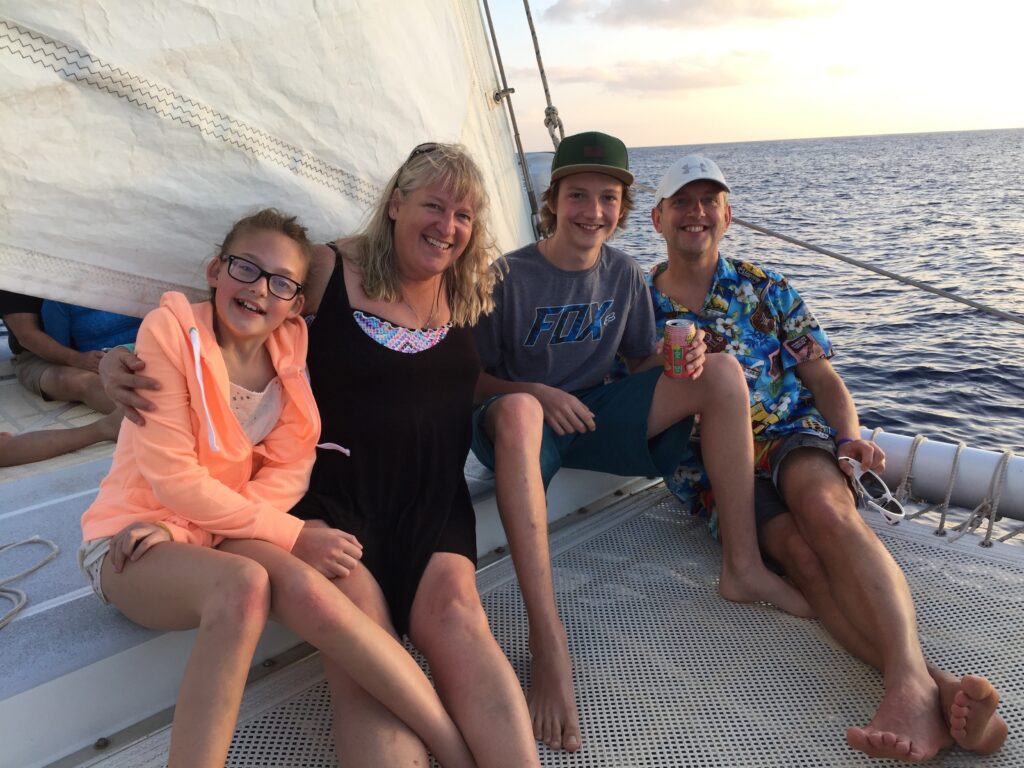
L-R Natasha, Saskia (mom), Liam (brother) and Bill (dad), having the summer of a lifetime.
Natasha underwent two rounds of
radiation to shrink the tumour, but the most it shrunk was 15%. They still
celebrated.
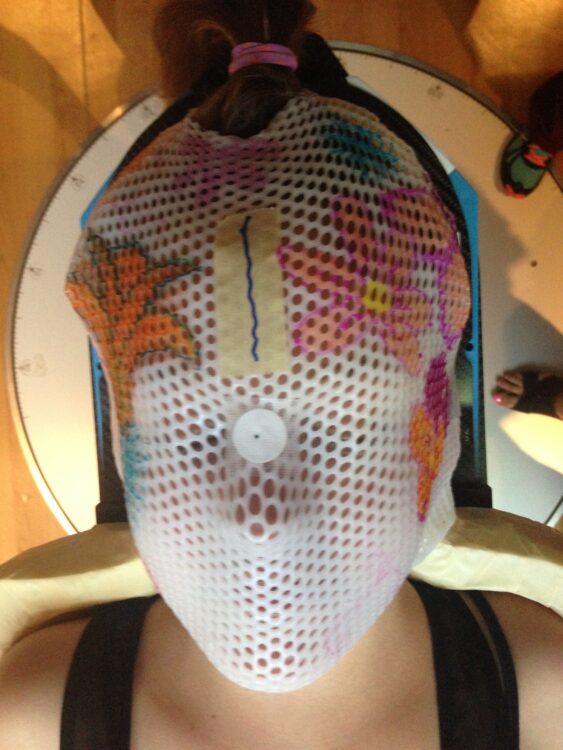
To undergo radiation to the brain, staff create a mesh mask perfectly contoured to the patient’s face. The mask is then bolted to the gurney to keep the patient’s head still so only cancerous tissue, and not healthy tissue, is targeted.
When Natasha asked to do more radiation, her parents had to tell her that the radiation would not save her life. “Natasha, you don’t have to do this,” Bill explained. “This won’t save your life. It will only prolong your life.”
Natasha’s radiation mask after she decorated it.
A star is born
Early in treatment, Natasha started blogging about her experience. It wasn’t long before she amassed quite a following and eventually caught the attention of Mike Gillette of The Truth365 and CureFest. The Truth365 and CureFest are American-based non-profits that advocate for more research funding for children’s cancer research.
As part of their advocacy work, The Truth365 features a different child with cancer every day of the year. Mike flew to Calgary to interview Natasha. He was so impressed, after interviewing her, he invited her to speak at CureFest 2015 in Washington, D.C.
Mike Gillette interviewing Natasha for The Truth365.
Natasha was all in.
The night before CureFest, about 250 people were gathering to hold a candlelight vigil in Lafayette Park, across the street from the White House. When they arrived, the park was closed, and the United States Secret Service denied them access. This bothered Natasha immensely and she ruminated on it all night. The next day, she seized the moment and publicly raised her concerns during the preamble to her CureFest speech.
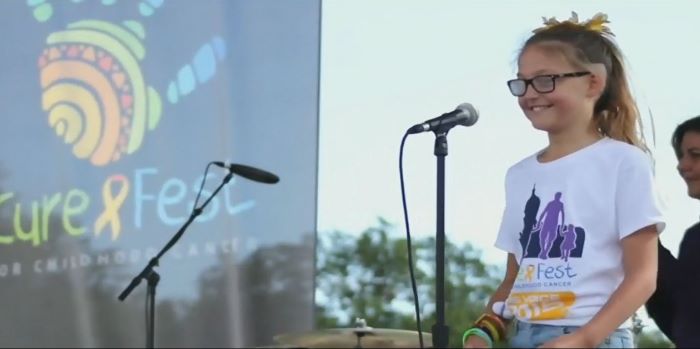
Natashaat CureFest 2015 in Washington, D.C.
No one could have predicted what would come next. Natasha made national headlines. The story spread like wildfire, resulting in a public apology by the Director of the Secret Service Joseph Clancy, who would later become a lifelong friend of the family.
Troubled by the misunderstanding
and turn of events, Joseph Clancy reached out to Mike Gillette and invited them
back to Lafayette Park: “How about in a month’s time, you come back, and I
guarantee it won’t be cancelled.”
When CureFest returned a month later, the U.S. Secret Service had included Natasha’s website and brand colours on their website. Joseph Clancy later recorded a video for Natasha’s Celebration of Life.
As the brain cancer increasingly limited her physical functioning, Natasha grew stronger in
spirit and resolve. She blossomed into a formidable activist, giving numerous
media interviews in Canada and the U.S. She also gave a TEDx Talk for which she
received a standing ovation.
Natasha was sick with a cold but when she started speaking on that TEDx stage, she came alive. She didn’t want to get off the stage. “I have more to say,” Natasha said backstage. “I have more to say.
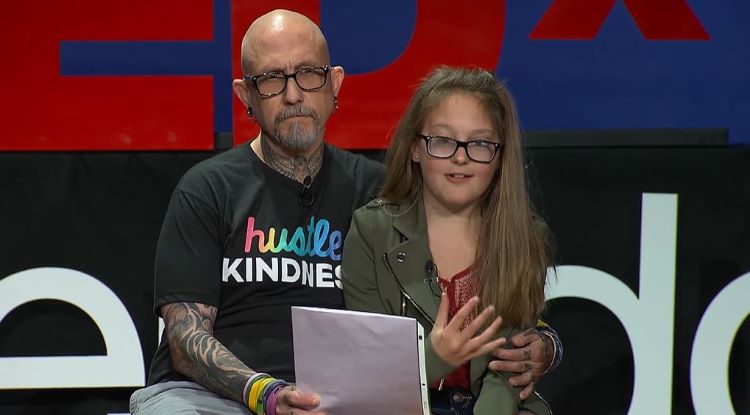
Natasha giving her TEDx Talk.
If Natasha had lived to be an
adult, she would have likely pursued a career in the arts, communications, or
journalism.
“She gets this from her mother Saskia,” Bill points out. “I think my response would have been to go hide under a rock somewhere, but Natasha wanted to be proactive. She wanted to rise up and share her story. It was ramping up of her personality.”
“She was forever writing a song,
forever writing a story,” says Saskia. “This was a natural extension of who she
was. She became an advocate for other kids fighting cancer.”
Natasha understood the disparity in funding between adult and children’s cancer research. She was passionate about righting this inequity, as are her parents today.
“Think of all the technological improvements you have every time you upgrade your iPhone,” says Saskia. “We have the technology, the wisdom, and the knowledge, and with God’s help, we can come together to collaborate to find a cure. Only five per cent of cancer research funding goes to children’s cancer research. When you look at the years lost for children, the aggregate of that just doesn’t make sense.”
Bill agrees: “They’ve made
advances in radiotherapy but the basic protocol for DIPG hasn’t changed for
many, many decades. In fact, Neil Armstrong’s daughter died of DIPG in 1962,
before he went to the moon, and the protocol is still the same.”
Waiting for a miracle
As Natasha’s condition worsened, they began having conversations about the afterlife.
“Your faith grows stronger,” says Saskia. “You’re waiting for a miracle to happen. Either here or in heaven your miracle will manifest.”
“Mom, what’s heaven like?” Natasha would ask.
Saskia would reply, “’Well, Opa is there, and he always wanted a farm. I’m sure he has a piglet for you,’ [Natasha always wanted a piglet.] ‘And your lesson horse Play is there.’” [Play was a lesson horse, the only horse Natasha ever bonded with, and that horse had passed.]
“We had lots of conversations
like this,” Bill recalls. “She was worried about being alone or waiting for
us.”
Bill tried to comfort his daughter: “Here on earth, you’re time-bound, but in heaven, you’re not, so in a blink of an eye, we’ll be with you again. We’ll be right there with you.”
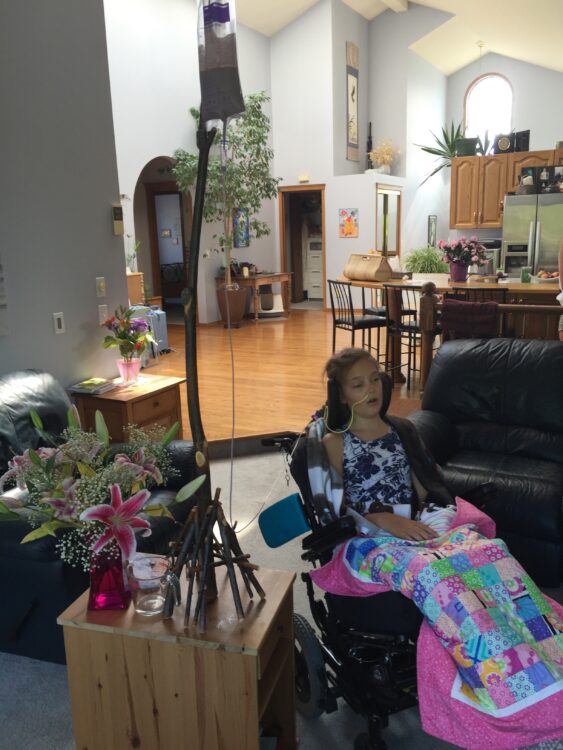
Natasha at home, later in her cancer journey.
Even in their own pain, Bill and Saskia’s only concern was Natasha.
“One of the hardest parts of Natasha’s journey was she was very resilient, but at the end, she did become very tired,” says Bill. “Physically her body was shutting down. The cruel part of this disease is cognitively you’re absolutely intact to observe your body shutting down around you. And the last weeks when she couldn’t speak. She wasn’t swallowing. We lost that connection. I know she was with God and God was with her, but we lost that connection with her. In that way, she was isolated from me, and we couldn’t be with her.”
“We just kept talking to her,” Saskia explains. “Telling her she was not alone. God was there, that God was going to show up for her in a bigger way because of her circumstances. He wasn’t not going to be there for her. It was so unbelievable, Natasha could not communicate with her parents, her brother, other family. Those last days were really, really hard.”
Losing Natasha
The world lost a bright light on August 4, 2016, when Natasha took her last breath with her parents and brother Liam by her side.
“It was an awful and sacred
moment to experience someone’s spirit leaving their body,” says Saskia.
About 100 close friends and
family had arranged to show up outside the home with candles that evening to
show their love and light for Natasha. She passed away at 7:30 p.m., two hours before
the scheduled time. Not knowing she had passed they arrived at the scheduled
time, which meant that a stream of close friends could come in to view and
touch Natasha one last time.
Natasha’s ripple
The cost of inadequate research funding is the loss of young
lives and unimaginable pain for loved ones. Bill and Saskia are trying to
change this.
In the weeks after Natasha’s passing, they began organizing the first CureFest Canada. Bill and Saskia organized CureFest Canada for four consecutive years before COVID-19 hit in 2020. Today, they work with CureFest International to live-stream it through the U.S.
During those four years, Bill and Saskia held candle light vigils in honour of the children who pass away from cancer. They brought together children’s cancer groups from across Alberta to advocate for children with cancer at CureFest. Working with Natasha’s friends and cousins, they brought together dancers, musicians, politicians, cancer researchers, health care professionals, children and parents, and the local media to advocate for more research funding for children’s cancers.
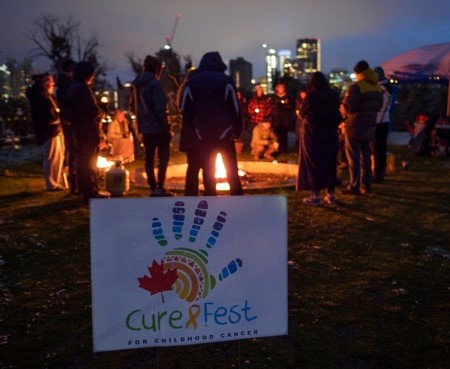
A candlelight Vigil at Saint Patrick’s Island, held each year the day before CureFest.
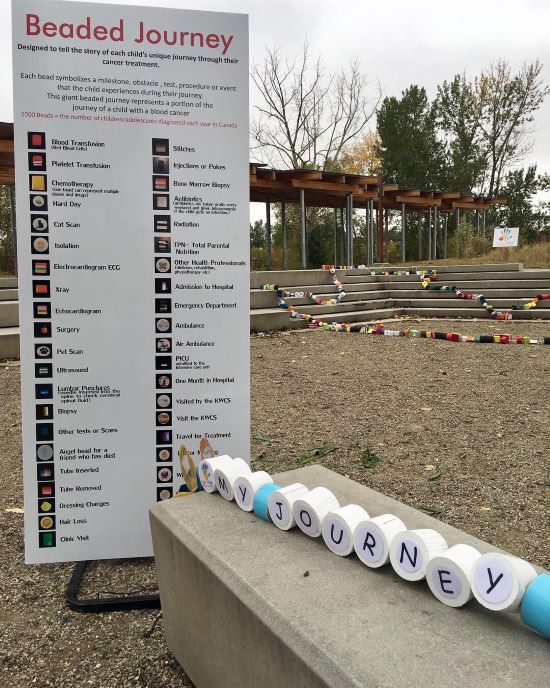
In the first year of CureFest, Bill and Saskia included a bicycle ride as Natasha had requested that kids ride their bikes at her Celebration of Life. In 2018, they commissioned a giant Beads of Courage, which they displayed during CureFest, to show people what children with cancer go through during treatment. While at the hospital, children with cancer receive Beads of Courage to help them record their cancer experience. Each bead represents a different treatment or milestone on their journey. The colourful beads are a tangible keepsake for children to help them understand their cancer experience and explain it to others.
The giant Beads of Courage at CureFest 2018. Kids Cancer Care funds the Beads of Courage program at the Alberta Children’s Hospital. The beads are given to children to help them understand their cancer experience. Each bead represents a medical procedure or milestone in the child’s cancer journey.
“Every day on Facebook, I see
more children being diagnosed with DIPG and because of our experience, we know
what the probable outcome will be, and we know the fear and the panic and the
researching under every rock, thinking, ‘There’s gotta’ be a way,’” says
Saskia.
“And of course, if you took all those kids from around the world who are diagnosed with DIPG every day and put them in a school bus that went over a cliff, you would hear about it,” says Bill. “People would be outraged.”
But people don’t hear about DIPG as it quietly kills a child here and a child there and no one, but their family and friends, ever know about it.
Sometimes it’s difficult to not be angry, but Bill and Saskia strive for a balance.
“One of our missions in this process was to live in joy for our son Liam and in Natasha’s honour because life is worth living,” says Saskia. “To fight every day would be in contrast to living in joy every day. It’s a balance.”
Hope on the horizon
With support from our generous
community, Kids Cancer Care and countless parents like Bill and Saskia are
working to change the funding disparity to give kids a fighting chance. Thanks
to your donations, a change in protocol for DIPG may be on the horizon.
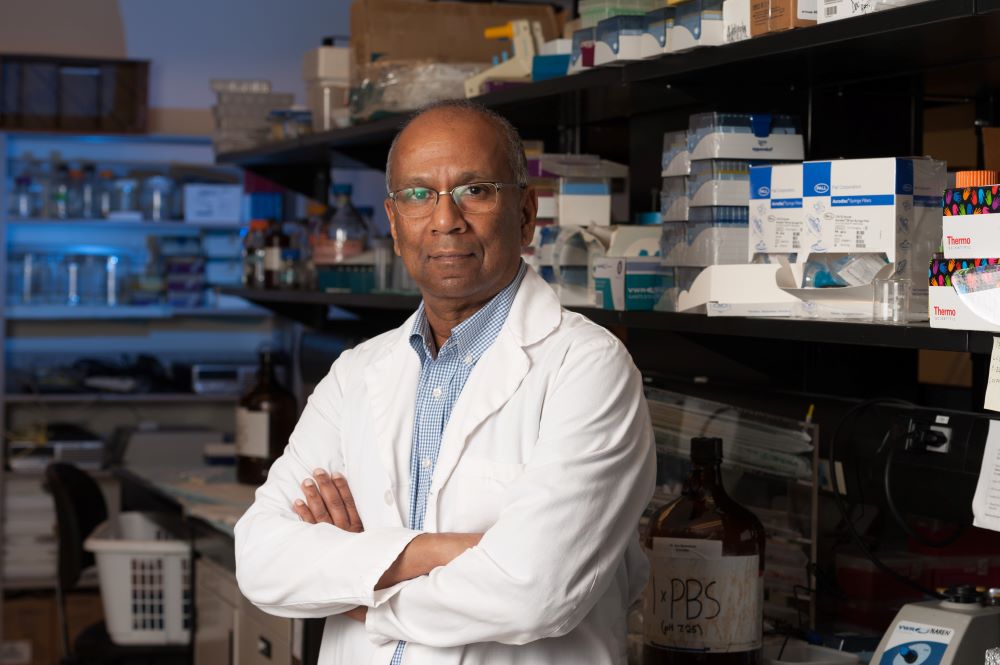
Dr. Aru Narendran, a Kids Cancer Care-funded researcher at the
University of Calgary and the Alberta Children’s Hospital, is collaborating
with a group of American scientists on a vaccine for DIPG.
Approved by the Health Canada and the FDA for a phase one clinical trial in Canada and the U.S., children from across North America are currently participating in the trial.
“The basic principle of vaccines is to re-stimulate or re-educate the immune system, so it can identify a foreign agent, be it a virus, bacteria or cancer cell, to initiate an immune response,” says Dr. Narendran.
Dr. Aru Narendran is working with American scientists to test a vaccine for DIPG in children. Approved by Health Canada and the FDA for a phase 1 clinical trial in Canada and the U.S., children from across North America are participating in the trial.
Cancer cells show up in the body frequently, but the immune
system normally detects the cells as foreign and initiates an immune response
to kill them. Dr. Narendran seeks to understand the fundamental biology behind
why and how some cancer cells manage to trick the immune system and escape
notice.
“When a normal cell becomes cancerous, it expresses new proteins
that are not found in healthy cells,” says Dr. Narendran. “These new proteins,
called antigens or neo-antigens, set off warning bells in the immune system.”
Developed by a group of American scientists, the DIPG vaccine
was created to identify and attack a specific group of neo-antigens involved in
DIPG. The goal of the trial is to determine the safety of the vaccine in
children.
By looking at the anti-DIPG cancer cell antibodies, which form
in children who receive the vaccine, Dr. Narendran’s team is seeking to better
understand its benefits, particularly a phenomenon known as neo-antigen
spreading.
“When we are infected by a bacterium or virus, the immune system
initially recognizes only parts of that intruder, say, A, B, and C proteins,”
explains Dr. Narendran “The immune system then stages a response to A, B, and
C, but after a while, it spreads and can act on F, G, H, I, J, and K proteins.
It’s like a ripple in a pond; it just keeps spreading outward.”
Dr. Narendran has observed a similar response in cancer studies
in the lab: “We noticed that the immune response following the vaccine
increases gradually and widely against the DIPG cells. This is an absolutely
fascinating way by which the immune system carefully and effectively increases
its offense against its target.”
The goal of his research is to finetune the vaccine into a
super-vaccine that is both safe and more and more effective in targeting and
killing DIPG cancer.
“I would love to see a cure for DIPG in my lifetime,” says Bill. “I would celebrate that, absolutely, that would be a joyous day. There would be a small part of me thinking, ‘Why couldn’t we have had it in time for Natasha?’ but I would be joyous just knowing that other parents and children won’t have to go through what we did.”
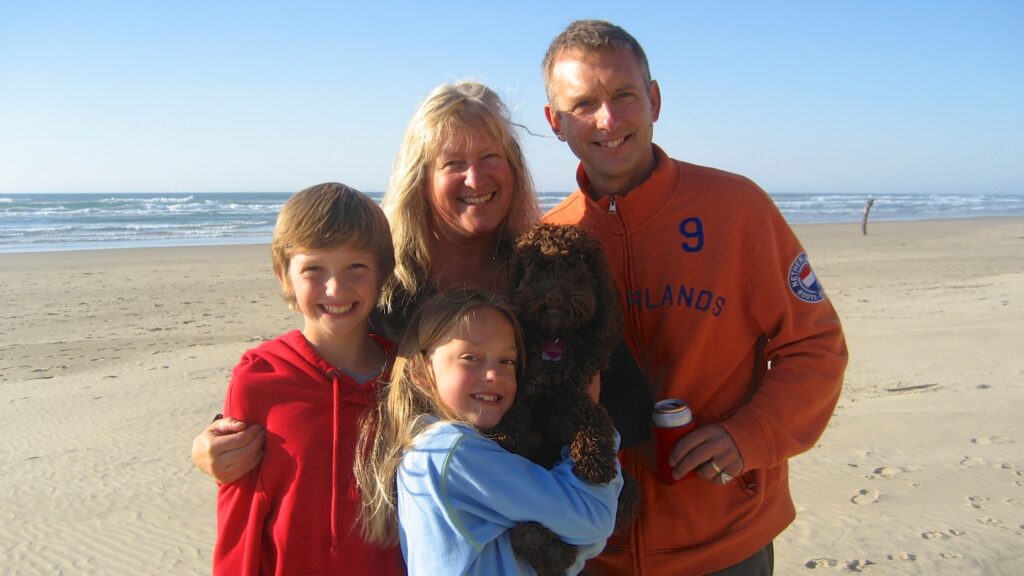
The Gould family enjoying their camping holiday at the beach.
To read more about Natasha and her cancer journey, visit her blog here.
Thank you to our generous fundraising partners who make our programs and services possible