Hello out there, we’re on the air, it’s ‘Hockey Night’ tonight. Tension grows, the whistle blows, and the puck goes down the ice. The goalie jumps, and the players bump, and the fans all go insane. Someone roars, “Bobby Scores!” at the good ol’ Hockey Game.
Bobby Orr, Wayne Gretzky, Gordie Howe, Haley Wickenheiser, Jarome Iginla. Idolized by fans, their stats are etched in the minds of those who love the game and their names are stitched across the backs of well-loved jerseys by those who cheer their names.
At Kids Cancer Care, we know of a special kind of hero from the good ol’ hockey game – one that makes an impact on AND off the ice. These hockey heroes aren’t just players, they are coaches, hockey moms and dads, friends, schoolmates, principals, administrative staff. And they are changing the course of childhood cancer.
Our community hockey partners are exceptional. They raise funds for Camp Kindle, for research, for outreach programs, for hospital programs, scholarships and PlayStations (we’ll get to that).
But, we figure the best way to tell you about these hockey legends is to run down the stats for you.
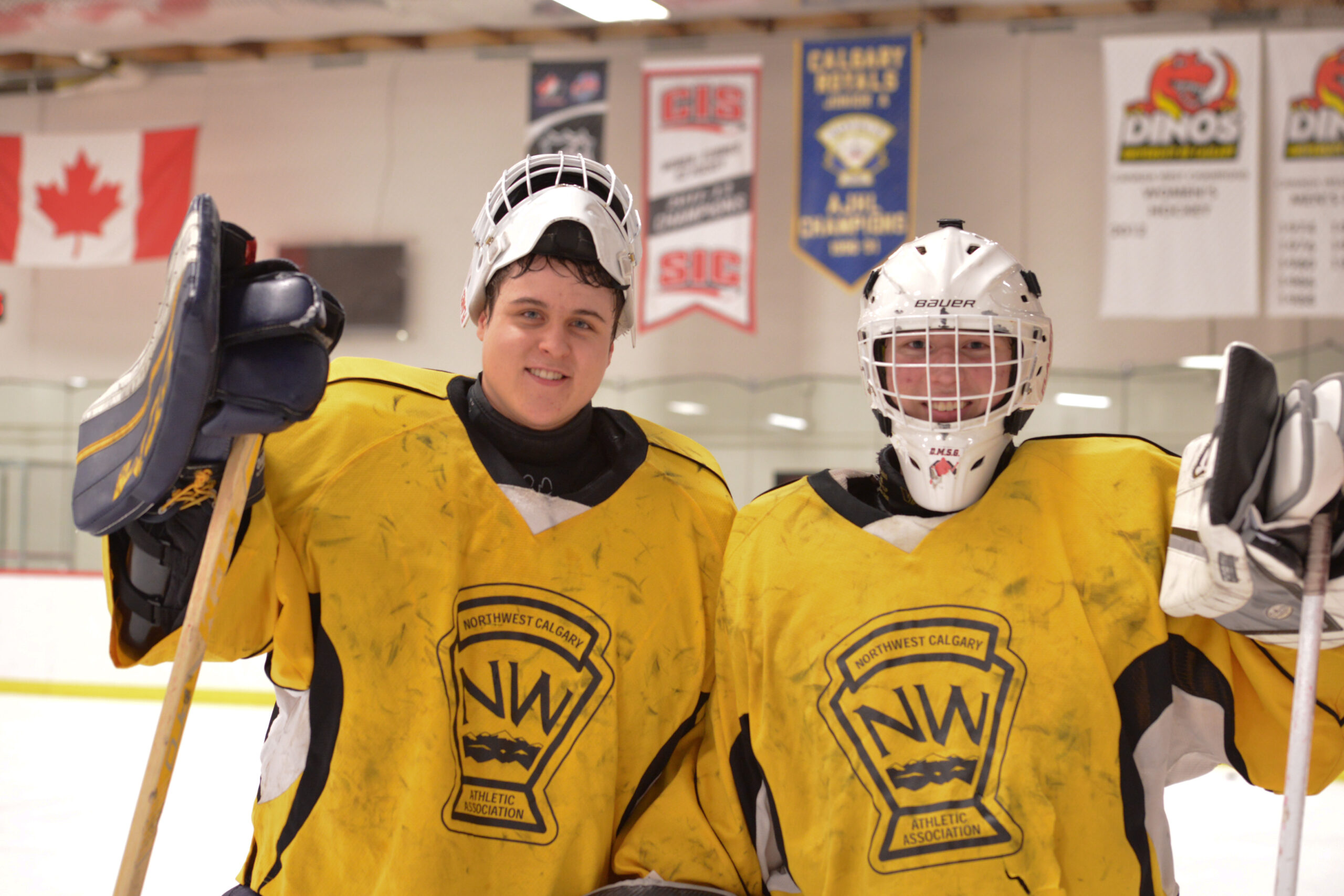
Northwest Calgary Athletic Association Team: NCAA Midget AAA Flames City: Calgary, AB Motivation: Friend Joel Zukowski, who lost his battle in 2015
Highlights: – Teammates shoveled sidewalks, collected bottles, reached out to friends and family to raise money for Kids Cancer Care.
– Many of the players shaved their heads on CTV Morning Live, extending a brave show of support for the children who lose their hair to chemotherapy.
– Raised over $44,000—enough to send 29 children affected by cancer to Camp Kindle.
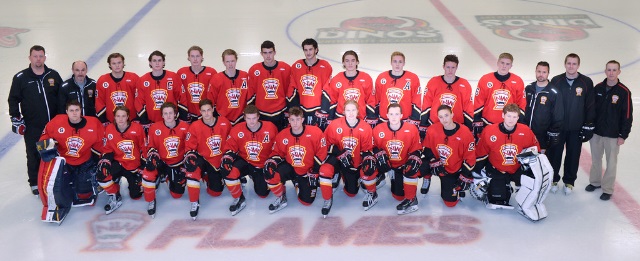
NCAA Midget AAA Flames
The Hockey Heroes fundraiser in honour of team member Tyler Oakenfold’s best friend Joel Zukowski. Joel passed away in October 2015 at the age of 16 after a courageous seven-year battle with brain cancer. He was a quiet, gentle soul who touched countless lives through his kindness and wisdom. Joel and Tyler first met in pre-school at the age of four. The boys shared a love of hockey, playing shinny on the homemade rink in Tyler’s backyard.
The 20 players on Tyler’s hockey team, the Northwest Calgary Athletic Association Midget AAA Flames, vowed to raise $30,000 to send kids affected by cancer to Kids Cancer Care’s Camp Kindle, where Joel had spent much time. They raised $14,000 more than their goal and they are back at it again in 2017. This year, they are hoping to expand the amount of teams and players involved. It all started with the love of the game and a dear friend.
Simons Valley Hockey Association Team: Simon Valley Storm City: Calgary, AB Motivation: Player Alec Remenda who lost his battle in 2016
Highlights: – Alec was a member of the team and the fundraiser was started to show support for his family. Today, the hockey fundraiser continues in his memory.
– Passionate about hockey and video games, Alec inspired fundraising for new PlayStations for unit one at the hospital, as a distraction for kids during treatment. Thanks to Alec, kids can continue to play their favourite sports virtually, while they are in the hospital.
– In the past two years, this team has raised close to $100,000 for Kids Cancer Care
Alec Remenda
Only days after celebrating his 13th birthday, Alec Remenda was diagnosed with Ewing sarcoma, a rare type of cancer in which rapidly growing tumours are found in the bone or in soft tissue. Alec was known for his love of hockey and he was passionate about playing for the Simon Valley Hockey Association. While his treatment made it so he couldn’t play, he remained an important part of his team. That’s why they started the Stick It to Cancer charity hockey tournament.
Sadly, after years of extensive chemotherapy and radiation treatment, Alec passed away in July of 2016. His team has vowed to continue fundraising in his honour. This year will be the third annual event.
Mac’s Midget AAA World Invitational Tournament Team: Various teams, volunteers and teen leaders City: Calgary, AB Motivation: Kids Cancer Care’s Teen Leadership Program
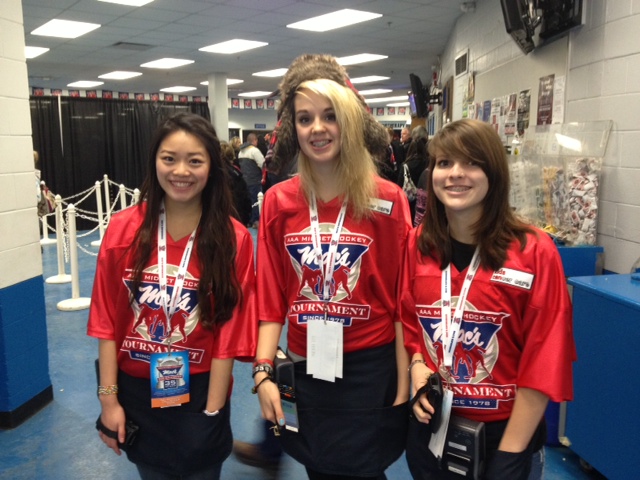
Highlights: – Our name appears on volunteer jerseys, the ice and in the program. A great way to raise awareness about Kids Cancer Care, the tournament draws as many as 100,000 spectators over seven days!
– Kids Cancer Care volunteers and teen leaders sell 50/50 tickets with the proceeds coming back to our programs.
Teen Leaders sell 50/50 tickets
The Mac’s Midget AAA World Invitational Tournament is a prestigious ice hockey tournament held annually from December 26 to January 1. The tournament features 25 male and 15 female teams from across North America and Europe. It draws large crowds and raises a ton of money for our Teen Leadership Program, where patients, survivors, siblings and bereaved siblings enjoy opportunities to develop as leaders through self-reflection, peer support, skill building, volunteerism and a service trip.
The Calgary Flames Foundation and The Calgary Hitmen Foundation Teams: The Calgary Flames and The Calgary Hitmen City: Calgary, AB Motivation: Kids across the province affected by cancer
Highlights: – They have given over $1.2 million dollars to Kids Cancer Care, including a sizeable donation to help us realise our dream of owning and operating our own camp.
– Number 11, Mikael Backlund, is our Flames champion. He picked us as his charity of choice, and invites our families to a game each year and supports us year round.
Flames Foundation visits Camp Kindle
Through annual fundraising events such as the Flames poker and golf tournaments and the Flames 50-50 raffles we thank our supporters. Through annual fundraising events such as the Flames poker and golf tournaments and the Flames 50-50 raffles we thank our supporters.The Calgary Hitmen and Calgary Flames are ideal partners. Not only have they been a part of creating memorable experiences for kids affected by cancer by supporting our programs and camps financially, but they also provide tickets to games, along with meet and greets with the players. These games are a light in an otherwise dark cancer journey.
In 2009, after 20 years of having to beg, borrow and rent space to send children with cancer to camp, Kids Cancer Care purchased its own camp. We called it Camp Kindle because, for hundreds of Alberta children and families facing cancer, it would be a place where childhoods, interrupted by cancer, could be rekindled. We needed funds to purchase the camp and carry out the necessary upgrades and renovations to make it suitable for children with cancer. The Flames Foundation for Life was there for us when we needed their support the most. With a donation of $1,000,000 they helped us fulfill our dream. In July 2012, after undergoing more than $12 million in renovations, Camp Kindle re-opened to Alberta children affected by cancer and their families.
From midgets to the pros, Kids Cancer Care is honoured to have such great support from our hockey community in Alberta. And now, supporting us is even easier. We recently launched online Community Fudnraising pages to make your fundraising campaigns even easier. To learn more, click here.
Thank you to all our hockey partners for their dedication to changing the course of childhood cancer.
Oh! The good old hockey game,
Is the best game you can name;
And the best game you can name,
Is the good old Hockey game!
Alec Remenda was a member of the Simons Valley Storm
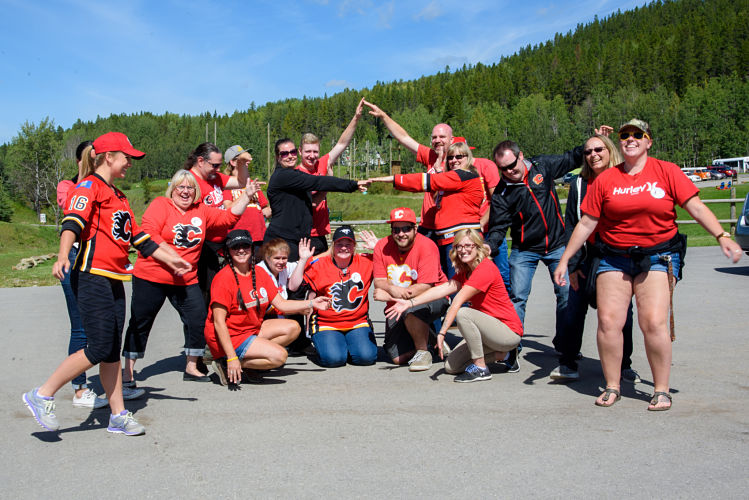
Families at a Flames game
Creating memories!
Proud to host The Flames Foundation at camp!
Hanging at the ‘dome!
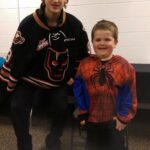
Meeting the players after the game
Years ago, when I was a small child, I received a new cancer treatment that saved my life. Right now here in Alberta there are children who need new treatments because current therapies are not working. To show you how important these treatments are I’d like to share my story.
Kate’s cancer journey began when she was four
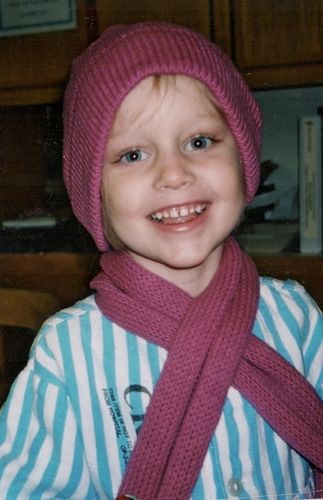
It starts way back in September of 2001 when I was four and my Mom and Dad noticed that I was unusually crabby and irritable. I wasn’t myself at all. Normally I was a happy and energetic kid. But, at that time, I was so tired I used to curl up on the couch and have a nap after breakfast. Sometimes, climbing the stairs was just too much. I would wait at the bottom of the stairs for my mom or dad to carry me up to my room. My parents thought my change in behavior was due to the recent changes in our life. I had just begun pre-school and my mom had just started working again.
Eventually, my skin became so pale and my eyes, so puffy, that my parents took me to the doctor. In the beginning, the doctors thought my symptoms were from allergies. Then I started having these high fevers, so we took a trip to the emergency, where they finally did blood work.
Although my family wanted answers, no one was prepared for the shocking news and the terrifying statistics that came with the results of my blood work.
At first it looked good. Doctors originally thought I had acute lymphoblastic leukemia (A-L-L), a leukemia with high survival rates in children. But when I went in for a test the next day to confirm the diagnosis, the doctors hit us with even worse news. With sinking hearts, my Mom and Dad learned that I didn’t have A-L-L. I had a cancer that was very aggressive and not often found in children. Acute myeloid leukemia. My long-term survival rate was suddenly cut in half.
Knowing that 25% of children with A-M-L don’t survive the first phase of chemo, the doctors offered my parents a new treatment protocol. I was one of the first patients at the Alberta Children’s Hospital to ever receive this treatment.
And so I began my first of four rounds of chemotherapy. Strangely, instead of making me sick, at first, the chemo made me feel better. My body wasn’t producing red blood cells or platelets and I had just received my first of many, life-saving blood transfusions. I was coming back to life again.
I finished the first half of that round of chemo and had a three-day break. I looked better than I had in months and we were excited to get our family pictures done.
But by the ninth day of treatment, I had zero white blood cells and the fevers began. They were relentless, hovering between 38 and 41. The drugs that once made me feel better were now making me sick. When I finished that first round of chemotherapy, they put me on the strongest antibiotics possible. Without any white blood cells, my body had nothing to fight infection on its own. Even the strongest antibiotics didn’t work.
Those hours you spend with or without white blood cells can make all the difference. It can determine whether or not you live. But the antibiotics can only do so much without help from your body. It was critical to get my white blood cells back up…so I began daily injections. After 48 hours in ICU, new blood work brought some good news. My white blood cells were coming back and, after a bone marrow biopsy, they discovered I was in remission!
That was round one.
Due to the complications I experienced during the first round of chemo, the doctors changed my second round. Despite the changes, the second round hit me hard. My weight dropped dangerously low. I wasn’t eating and I had excruciating pain in my chest. When the pain in my chest grew, they did some tests and found I had fluid around my heart and scar tissue in my lungs. I was four years old and I had suffered a heart attack! They did a laparoscopic lung biopsy to remove the fluid around my heart. But it wouldn’t budge. Finally they used a much larger needle and extracted the fluid.
After the chest tube was removed, I finally took a turn for the better. I wanted to eat for the first time in months. When I found out that Santa was coming to the hospital, I got super excited. And, for the first time since I’d gone into the hospital, my mom believed I would be home for Christmas.
She was right. I got a two-hour pass to go home on Christmas Eve. Although I spent most of the evening in my father’s arms, it was amazing to finally be out of the hospital.
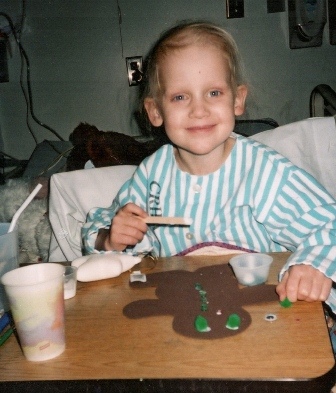
I began my third round of chemo in the New Year and then my fourth. During my fourth round of chemo, I had a fever for 28 days! I ended up with another fungal infection in my lungs. By the end of the last round of chemo and, after 7 months in the hospital, my parents couldn’t believe they were finally taking me home.
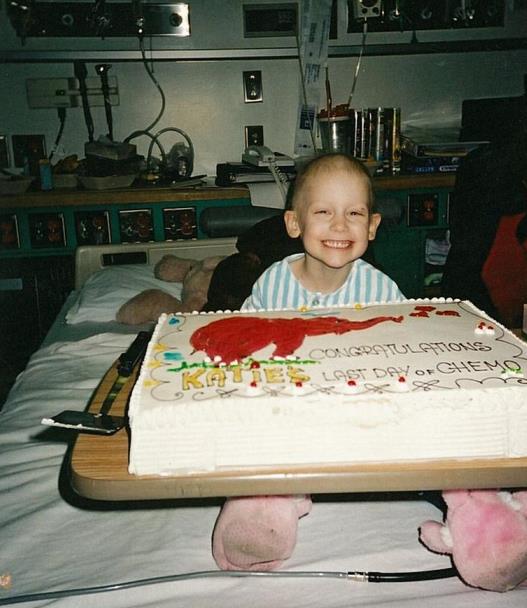
Last day of chemo and ready to go home
Mom tells me that the shock of hearing the words, “Your child has cancer,” cannot be explained. The fear and uncertainty ran so deep, she felt like her world had stopped.
How does a child survive cancer? How do you take care of such a sick child and still care for your children at home? How do manage to go to work each day, when you’ve been sleeping on a cot next to your daughter’s hospital bed?
My bothers and I became my mom and dad’s total focus. Their daily routines were filled up with us, constantly spelling each other off for work or hospital shifts. My mom had only been back to work for three months when I was diagnosed. Needless to say she quit her job and I became her new daytime focus. My brothers were in school, so my mom would get them off to school in the morning and then come to the hospital to relieve my dad who spent every night with me — either on a cot or in a Lazy Boy. My dad would head to work for a few hours and then pick up my brothers from school and have dinner with them. Then around seven o’clock, my dad would come back to the hospital, relieve my mom, who spent every day with me.
They did this for seven months! They had very little time together and carried around an enormous amount of stress and anxiety.
My brothers Owen and Evan were only six and seven and they were feeling really lost during this time. With only one parent around at any given time and a sister in the hospital, they were forced to grow up too quickly. They had to answer questions that no child should have to answer. Questions about cancer, chemo, hair loss, even worse, death.
That’s where Kids Cancer Care came in. They scooped us off that summer and gave us the magic of camp! They connected us with kids who knew exactly what we were feeling. They gave us a place where no one stares and where no one has to answer questions or feel like they need to hide.
After that week at camp, we started feeling like kids again and, my parents had time to regroup. It was then that they realized we were going to be alright. We were all okay. Finally.
Kate at the 2012 High Hopes Challenge
But really it wasn’t until Christmas 2002, more than a year after my cancer diagnoses, that the cancer-focus of our family finally started settling into the background — not our of our minds completely, but moving to the sidelines.
My mom says sometimes she doesn’t know how we all survived it. But somehow we did. She says you find the strength and courage you need and you learn that you have inner reserves you never knew you had.
Seeing me go through this was terrifying for my parents. The intense schedule they had to keep was physically demanding and emotionally exhausting. Cancer is tough on kids but sometimes I think it’s harder on the parents.
I wouldn’t be here today if not for that new treatment protocol. It was tough on my body, but it saved me. That treatment would not have been possible without research. It seems almost miraculous when I think about it.
I hope you realize now why I am so grateful for people who support Kids Cancer Care’s research program. Thank you. Please remember that the research you are supporting today could save a child’s life.
~ Kate
Kate’s photo gallery
Kate at Parents’ Quest
Thank you to our generous fundraising partners who make our programs and services possible